ScamBuster AI: Turning Phishing Emails into Threat Intelligence

Share
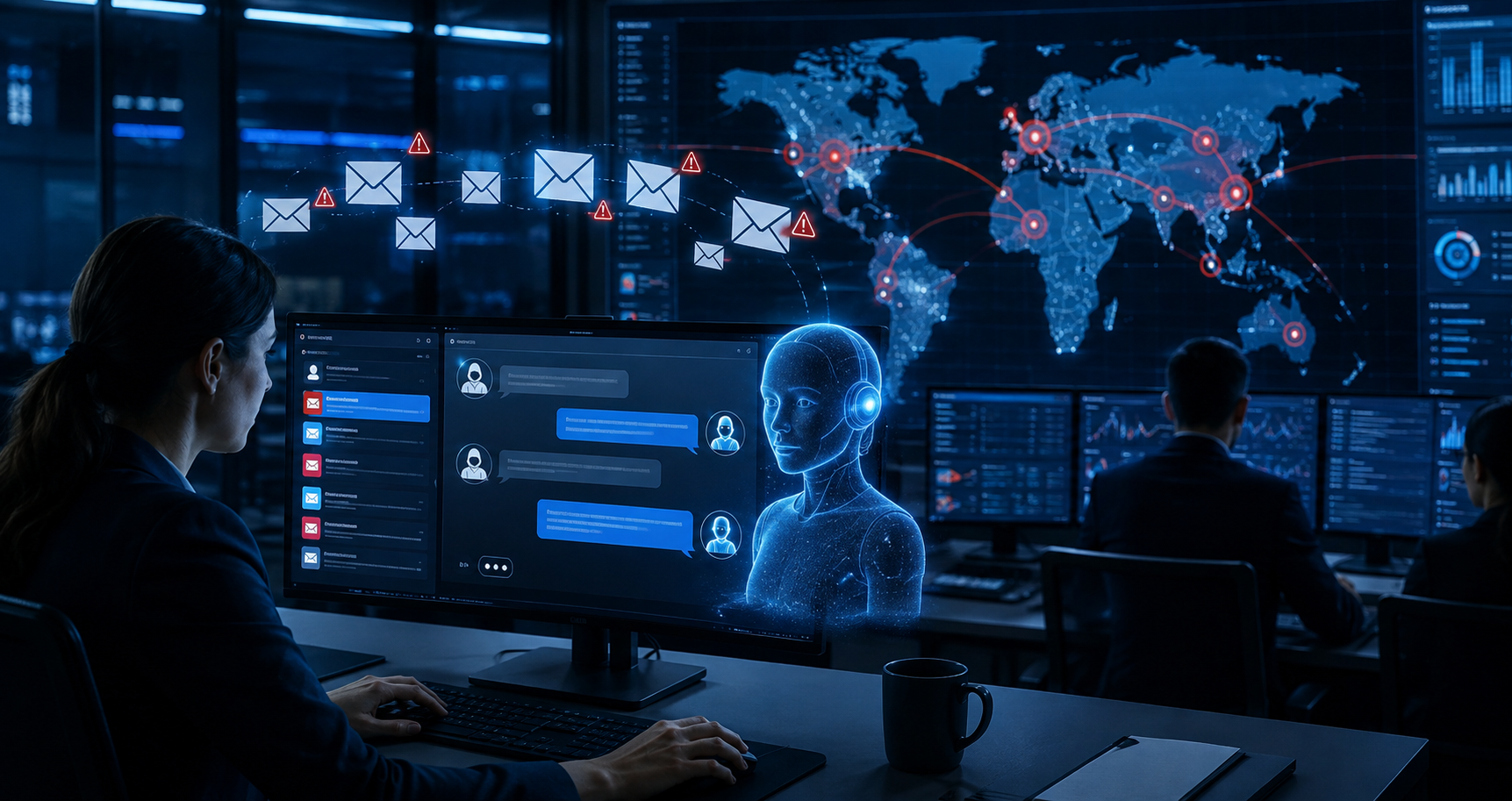
Email phishing has been around for decades, yet it remains one of the most effective ways for cybercriminals to steal sensitive information, spread malware, and compromise business networks. Organizations invest heavily in email security solutions, employee awareness training, and multi-factor authentication, but phishing campaigns continue to evolve. Attackers now use artificial intelligence, personalized messages, and sophisticated social engineering techniques that make fraudulent emails harder to identify than ever before.
Most email security solutions have one primary goal: stop malicious emails before they reach the intended recipient. While this approach prevents many attacks, it also ends the interaction immediately. The phishing email is blocked, quarantined, or deleted, and any opportunity to learn more about the attacker disappears with it. Security teams rarely discover who is behind the campaign, what infrastructure they are using, or whether the same techniques are being used against other organizations.
ScamBuster AI takes a different approach. Instead of treating every phishing email as something that should be discarded, it treats it as a potential source of intelligence. Using artificial intelligence, the tool responds to phishing emails, keeps scammers engaged in realistic conversations, and gathers information that security teams can analyze to better understand attacker behavior. Rather than simply preventing an attack, ScamBuster AI attempts to turn the attacker’s own tactics into an advantage for defenders.
The project reflects a broader shift in cybersecurity. Organizations are no longer satisfied with knowing that an attack was blocked. They want to understand how it was carried out, who conducted it, and whether the same threat actor is targeting other businesses. Intelligence gathered from phishing campaigns can strengthen future defenses, improve incident response, and help security teams identify patterns that traditional email filters often miss.
In this article, you’ll learn what ScamBuster AI is, how it works, why it has attracted attention within the cybersecurity community, and where it fits into a modern email security strategy. We’ll also discuss its benefits, limitations, and what businesses should consider before adopting technologies that actively engage with attackers.
Key Takeaways
- ScamBuster AI is an open-source project that uses artificial intelligence to engage with phishing attackers instead of simply blocking their emails.
- The conversations help collect threat intelligence, including attacker infrastructure, communication methods, and other indicators that can support investigations.
- The project highlights a growing trend toward intelligence-driven cybersecurity rather than relying only on preventive controls.
- ScamBuster AI is designed to complement existing email security solutions, not replace them.
- Organizations should evaluate the legal, ethical, and operational considerations before deploying tools that interact directly with attackers.
What Is ScamBuster AI?
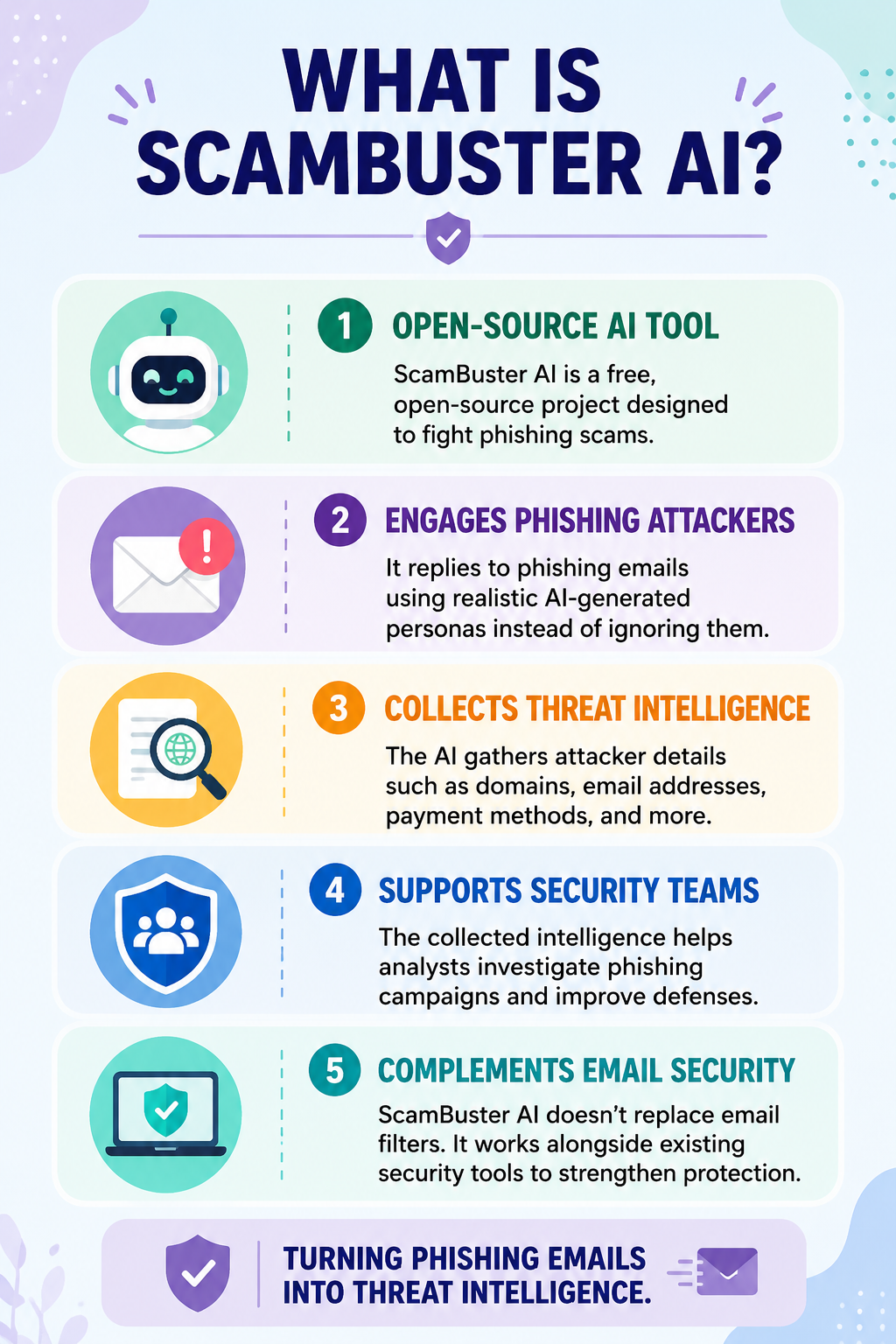 ScamBuster AI is an open-source cybersecurity project developed by Laurent Giovannoni, Principal Software Engineer at Filigran. The project was created with a simple but innovative idea. Instead of allowing phishing emails to reach a dead end, it uses artificial intelligence to continue the conversation with the scammer. The objective is not to trick the attacker into revealing classified information, but to encourage further communication that can uncover valuable threat intelligence.
The AI creates believable digital personas that resemble ordinary email users. Depending on the scenario, the system might present itself as someone unfamiliar with online banking, a small business owner responding to an invoice, or an individual who appears interested but confused about the instructions in the phishing email. Because the responses sound natural, the attacker is encouraged to continue the conversation rather than abandoning it immediately.
As the exchange continues, the system records information that could help investigators understand how the phishing campaign operates. This may include email addresses, phone numbers, cryptocurrency wallet addresses, payment instructions, domain names, URLs, and other indicators that security professionals use during investigations. The collected information can also be exported into standard threat intelligence formats such as STIX 2.1 and MISP, making it easier to share with other security tools and organizations.
What makes ScamBuster AI particularly interesting is that it changes the role of artificial intelligence in email security. AI has traditionally been used to detect spam, identify suspicious attachments, or recognize unusual email patterns. ScamBuster AI moves beyond detection and uses AI to actively gather intelligence that can improve future defenses. This shift has sparked discussions about how organizations might use artificial intelligence more proactively to understand cybercriminal operations.
Why Blocking Phishing Emails Is No Longer Enough
Blocking phishing emails is still one of the most important layers of email security. Every day, email gateways stop millions of malicious messages before they reach users. These systems reduce the likelihood of credential theft, malware infections, and Business Email Compromise (BEC). However, blocking an email only addresses the immediate threat. It does not answer the larger questions that security teams often face after an attack.
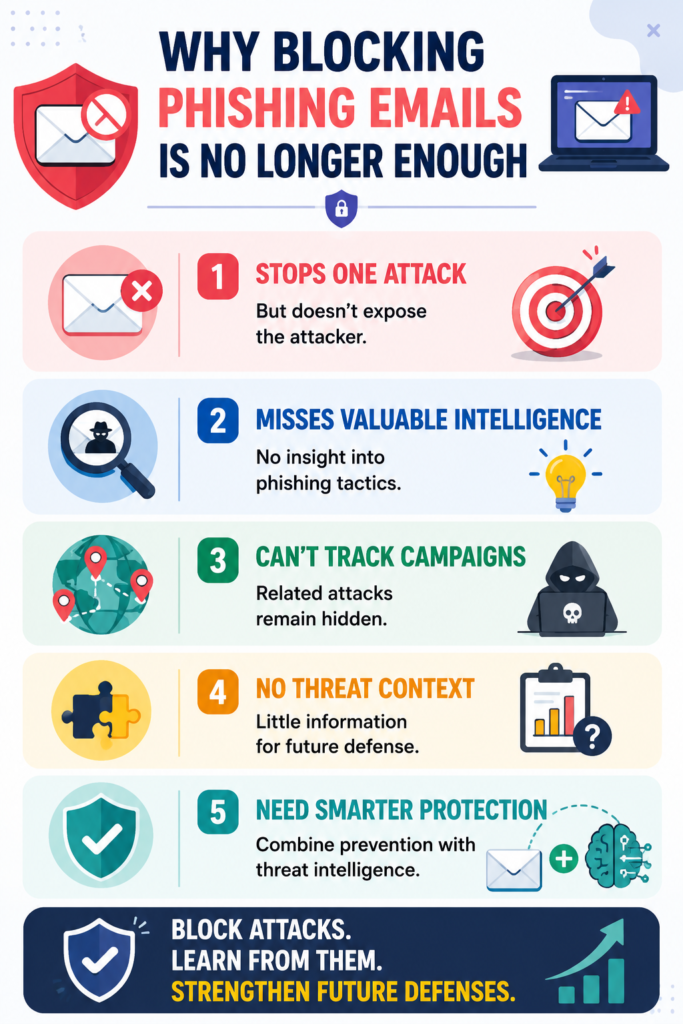
For example, where did the phishing campaign originate? Is the attacker targeting a single organization or an entire industry? Are multiple phishing emails connected to the same criminal group? Has the attacker changed their tactics since the last campaign? Traditional email filters rarely provide these answers because their job is to prevent delivery, not conduct investigations.
This is where threat intelligence becomes valuable. Threat intelligence focuses on collecting, analyzing, and sharing information about cyber threats so organizations can make informed security decisions. Instead of reacting to every phishing campaign individually, security teams use threat intelligence to identify recurring techniques, detect emerging trends, and strengthen defenses before future attacks occur.
If you’ve read our guide on threat intelligence at The Review Hive, you’ll know that good intelligence is built from multiple sources. Security logs, endpoint alerts, malware analysis, and phishing investigations all contribute to a clearer picture of the threat landscape. ScamBuster AI adds another potential source by collecting information directly from conversations with attackers, giving analysts additional context that may not be available through automated detection tools alone.
The project also reflects an important change in cybersecurity strategy. Organizations are increasingly moving from a purely reactive model toward a proactive one. Rather than waiting for the next phishing campaign, they want to understand how attackers think, how they communicate, and how their infrastructure evolves over time. Intelligence gathered today could help identify similar campaigns tomorrow, making future investigations faster and more effective.
This does not mean organizations should abandon traditional email filtering or user awareness training. Email security still depends on multiple layers working together. ScamBuster AI is intended to strengthen one part of that layered approach by providing insights that conventional security controls may never collect.
How ScamBuster AI Works
At first glance, ScamBuster AI may seem like an automated chatbot that replies to suspicious emails. In reality, the system is designed with a much more specific objective. Every response is intended to keep the attacker engaged long enough to gather meaningful intelligence without exposing legitimate users or organizational data.
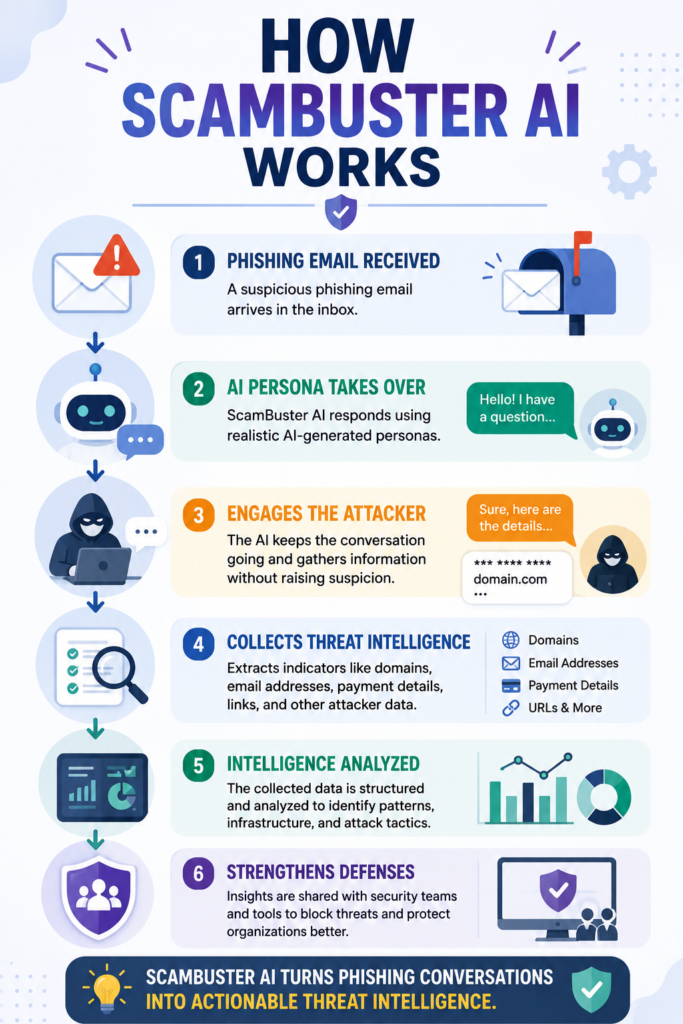
The process begins when a phishing email is identified. Instead of deleting or quarantining the message immediately, the system analyzes its content and creates an appropriate AI persona. The persona is selected to match the type of scam being attempted. For example, an invoice scam might receive responses from a fictional business owner, while a banking scam could be answered by someone who appears uncertain about online transactions. The goal is to make the interaction believable enough that the attacker continues the conversation.
As emails are exchanged, the AI carefully guides the discussion without revealing genuine personal information or organizational details. Throughout the conversation, ScamBuster AI records indicators that may be useful for security investigations. These include contact information, domains, payment requests, technical infrastructure, and communication patterns. The intelligence can then be organized into formats commonly used by threat intelligence platforms, allowing analysts to compare findings with other investigations and identify broader phishing campaigns.
The emphasis is not on defeating the attacker through clever conversation. Instead, the objective is to collect reliable information while consuming the attacker’s time and resources. Every interaction has the potential to reveal another piece of the puzzle, helping security teams better understand how phishing operations evolve and how similar attacks might be identified in the future.
What Makes ScamBuster AI Different from Traditional Email Security?
Most email security platforms are designed to stop phishing attacks before users ever see them. They scan incoming messages for malicious attachments, suspicious links, spoofed domains, and known indicators of compromise. If an email matches predefined rules or machine learning models, it is blocked, quarantined, or flagged for review. This approach has significantly reduced the number of successful phishing attacks, but it also means the interaction ends as soon as the email is identified as malicious.
ScamBuster AI takes a different path. Instead of viewing a phishing email as something that should immediately disappear, it views it as an opportunity to learn more about the attacker. The objective isn’t to convince scammers that they have found a genuine victim. Instead, the goal is to encourage them to reveal information that can support threat intelligence and future investigations.
This shift from prevention to intelligence gathering reflects a broader change in cybersecurity. Organizations increasingly recognize that stopping one attack is only part of the solution. Understanding how attackers operate can help identify future campaigns, improve detection rules, and strengthen incident response. Information gathered from one phishing conversation may reveal infrastructure or techniques that appear again in later attacks, allowing security teams to recognize patterns that would otherwise remain hidden.
That doesn’t mean traditional email security has become less important. Email filtering, endpoint protection, identity management, and employee awareness training remain essential layers of defense. ScamBuster AI is designed to complement these technologies rather than replace them. It provides an additional source of intelligence that security teams can use alongside existing security controls.
If you’ve read our articles on phishing attacks and Business Email Compromise (BEC), you’ll notice a common theme. Attackers constantly adapt their techniques, making every campaign slightly different from the last. Intelligence gathered through tools like ScamBuster AI could help security professionals recognize these changes earlier and respond more effectively.
| Feature | Traditional Email Security | ScamBuster AI |
| Primary Goal | Blocks or quarantines phishing emails before they reach users. | Engages with phishing attackers to gather threat intelligence. |
| Approach | Focuses on prevention and detection. | Focuses on intelligence gathering while complementing prevention tools. |
| Interaction with Attackers | Ends the interaction by blocking or deleting the email. | Continues the conversation using AI-generated personas. |
| Information Collected | Detects malicious links, attachments, and suspicious sender behavior. | Collects attacker infrastructure, email addresses, payment details, domains, and communication patterns. |
| Threat Intelligence | Limited to identifying and blocking known threats. | Generates additional intelligence that can support investigations and improve future defenses. |
| Role in Cybersecurity | Serves as the first line of defense against phishing attacks. | Adds a proactive layer by helping analysts understand attacker tactics and infrastructure. |
| Best Used With | Secure email gateways, spam filters, endpoint protection, and user awareness training. | Existing email security tools, threat intelligence platforms, and Security Operations Centers (SOCs). |
| Ideal Outcome | Prevents users from interacting with phishing emails. | Helps organizations learn from phishing campaigns while consuming attackers’ time and resources. |
Why Threat Intelligence Matters More Than Ever
Cybersecurity is no longer just about stopping attacks. It is also about understanding the people and infrastructure behind them. Every phishing email contains clues that can help investigators identify recurring campaigns, track attacker behavior, and improve future defenses.
Threat intelligence brings together information collected from many different sources. Security teams analyze phishing emails, malware samples, suspicious domains, compromised credentials, endpoint alerts, and network activity to build a clearer picture of emerging threats. Each piece of information contributes to a larger investigation, allowing analysts to identify relationships that may not be obvious when looking at a single incident.
ScamBuster AI adds another layer to this process. Instead of collecting only technical indicators from an email, it gathers information from an ongoing conversation with the attacker. The responses may reveal payment instructions, communication preferences, additional domains, cryptocurrency wallet addresses, or changes in the scammer’s tactics. When combined with other intelligence sources, this information helps security teams understand not only what happened, but also how similar attacks may develop in the future.
This intelligence becomes even more valuable when organizations share it with trusted security communities. Standardized formats such as STIX 2.1 and platforms like MISP allow security teams to exchange indicators quickly, helping others recognize and block related threats. A phishing campaign targeting one organization today could target hundreds of others tomorrow. Sharing intelligence reduces the time attackers have to operate successfully.
We’ve discussed this concept in several articles across The Review Hive. Cybersecurity works best when organizations treat intelligence as a shared resource rather than something that remains isolated within a single company. ScamBuster AI supports this philosophy by helping generate intelligence that can benefit the wider security community.
Can Small Businesses Benefit from ScamBuster AI?
When people hear about threat intelligence, they often assume it is something only large enterprises need. After all, multinational organizations have dedicated Security Operations Centers (SOCs), threat analysts, and incident response teams. Small businesses rarely have access to these resources.
However, phishing attacks do not discriminate based on company size. Small businesses are often targeted because they have fewer security controls and limited cybersecurity staff. A single successful phishing email can result in stolen credentials, financial losses, or ransomware infections that disrupt business operations.
Most small businesses may never deploy ScamBuster AI directly, and that’s perfectly reasonable. The project requires technical knowledge, careful planning, and clear operational policies. Even so, the ideas behind the project are relevant to organizations of every size.
The biggest lesson is that cybersecurity should not focus solely on blocking attacks. Every phishing attempt provides an opportunity to improve defenses. Businesses should review phishing emails, identify common themes, update employee training, and strengthen email security policies based on what they learn. Even without an AI-powered engagement tool, organizations can use phishing attempts to better understand the risks they face.
If your organization already conducts phishing awareness training, ScamBuster AI reinforces an important principle. Security is not a single technology or a one-time exercise. It is a continuous process of learning, adapting, and improving as attackers change their methods.
Challenges and Ethical Considerations
The concept behind ScamBuster AI is innovative, but it also raises important questions. Any technology that communicates directly with attackers must be designed carefully to avoid creating new risks while trying to solve existing ones.
One concern is ensuring that the AI never exposes sensitive information. Even though the conversations use fictional personas, organizations must verify that the system cannot accidentally reveal internal details, employee information, or confidential business data. Strong safeguards are essential because attackers constantly look for opportunities to gather intelligence from their targets.
Another consideration involves legal and regulatory requirements. Laws governing digital communications vary between countries, and organizations should understand how automated interactions fit within their legal responsibilities. While engaging with phishing attackers for research purposes may be appropriate in some situations, it is important to ensure that such activities comply with applicable regulations and internal governance policies.
Operational costs also deserve attention. AI-powered conversations require computing resources, monitoring, and ongoing maintenance. Organizations must decide which phishing campaigns justify engagement and how long those conversations should continue. Without clear policies, security teams could spend valuable resources interacting with low-value scams while missing more significant threats.
There is also the possibility that attackers will adapt. Cybercriminals have repeatedly demonstrated their ability to change tactics when defensive technologies become more effective. If AI-powered engagement tools become widely adopted, attackers may begin testing whether they are communicating with a real person or an automated system. This ongoing competition between attackers and defenders has shaped cybersecurity for decades, and ScamBuster AI is unlikely to change that dynamic.
These challenges should not discourage innovation. Instead, they highlight why new security technologies need thoughtful implementation. Organizations considering tools like ScamBuster AI should evaluate technical capabilities alongside governance, legal requirements, operational processes, and risk management.
Could Cybercriminals Use Similar AI Technologies?
Artificial intelligence has become accessible to almost everyone, including cybercriminals. The same technologies that help organizations detect phishing attacks can also help attackers create more convincing scams. AI-generated emails often contain fewer spelling mistakes, better grammar, and more natural language than traditional phishing messages. Some campaigns even personalize their messages by using publicly available information about the intended target.
This trend reinforces the need for defenders to adopt AI responsibly. As attackers automate parts of their operations, security teams need technologies that can respond at a similar speed. ScamBuster AI represents one example of how defenders are beginning to use artificial intelligence not only to detect threats but also to understand them more effectively.
At the same time, AI should never be viewed as a complete replacement for experienced cybersecurity professionals. Human analysts remain essential for validating intelligence, identifying false positives, understanding attacker motivations, and making informed decisions about incident response. Artificial intelligence works best when it supports human expertise rather than attempting to replace it.
If you’ve followed our coverage of AI in cybersecurity, you’ll know this balance appears repeatedly across the industry. AI can process enormous amounts of information far more quickly than humans, but effective cybersecurity still depends on skilled professionals who can interpret that information and decide how to act on it.
ScamBuster AI Is One Piece of a Layered Security Strategy
No single cybersecurity solution can prevent every phishing attack. Organizations achieve the best results by combining multiple layers of protection that work together. Email filtering helps block malicious messages before they reach users. Multi-factor authentication reduces the impact of stolen passwords. Endpoint protection detects malware that bypasses email defenses. Security awareness training helps employees recognize suspicious messages before they interact with them.
ScamBuster AI fits into this layered approach by strengthening the intelligence component of cybersecurity. It does not replace existing security controls, nor is it intended to eliminate phishing attacks on its own. Instead, it provides additional visibility into attacker behavior that can help organizations improve detection, refine security policies, and respond more effectively to future campaigns.
This layered approach is something we’ve emphasized throughout The Review Hive because modern cyber threats rarely rely on a single technique. Attackers combine phishing, credential theft, malware, social engineering, and identity attacks to achieve their objectives. Defending against these threats requires multiple security controls working together rather than relying on a single technology.
ScamBuster AI demonstrates that innovation in cybersecurity is no longer limited to building stronger barriers. Sometimes the most valuable insights come from understanding the attacker rather than simply blocking the attack.
The Future of AI-Powered Phishing Defense
Phishing attacks have changed significantly over the past few years. Attackers no longer rely on poorly written emails filled with spelling mistakes and suspicious links. Many phishing campaigns now use artificial intelligence to create convincing messages, personalize emails, and imitate trusted organizations. As these attacks become more sophisticated, defensive strategies must evolve as well.
ScamBuster AI represents one example of how cybersecurity professionals are rethinking email security. Instead of relying entirely on prevention, it introduces the idea of learning from every phishing attempt. While the project is still evolving, it demonstrates how artificial intelligence can support threat intelligence by collecting information that traditional email security solutions might never see.
The project’s developers have also indicated that future versions could expand beyond email. Voice phishing, commonly known as vishing, and SMS phishing, or smishing, continue to grow because attackers recognize that many users trust text messages and phone calls more than emails. If ScamBuster AI eventually supports these communication channels, organizations could gain a broader view of how attackers operate across multiple platforms.
At the same time, expectations should remain realistic. Tools like ScamBuster AI will not eliminate phishing attacks, nor should they replace existing security controls. Cybersecurity works best when multiple technologies, well-defined processes, and informed users work together. Artificial intelligence can automate repetitive tasks and gather valuable intelligence, but human expertise remains essential for interpreting that information and deciding how organizations should respond.
The emergence of projects like ScamBuster AI highlights a broader trend within cybersecurity. Security teams are moving beyond simply asking, “How do we stop this attack?” They are also asking, “What can this attack teach us?” Organizations that can answer both questions will be better prepared for the constantly changing threat landscape.
What Businesses Can Learn from ScamBuster AI
- Even if your organization never deploys ScamBuster AI, the project offers several valuable lessons. The first is that phishing emails should be viewed as more than isolated incidents. Every campaign provides information that can improve future defenses, whether it reveals a new social engineering technique, a recently registered domain, or a change in attacker behavior.
- The second lesson is the importance of layered security. No technology can prevent every phishing attempt. Organizations should continue investing in email filtering, endpoint security, multi-factor authentication, security awareness training, and regular software updates. Together, these controls reduce the likelihood that a single phishing email will result in a successful compromise.
- The third lesson is that threat intelligence should become part of every organization’s cybersecurity strategy. Businesses do not need a dedicated Security Operations Center to benefit from intelligence. Reviewing phishing attempts, reporting suspicious emails, monitoring trends, and staying informed about emerging threats all contribute to a stronger security posture.
- Finally, organizations should remember that technology alone cannot solve cybersecurity challenges. Artificial intelligence is becoming an important tool for both attackers and defenders, but informed employees remain one of the strongest lines of defense. Regular awareness training, clear reporting procedures, and a culture that encourages employees to question suspicious communications continue to play an important role in reducing phishing risks.
To Sum Up
ScamBuster AI demonstrates that cybersecurity is evolving beyond simply blocking malicious activity. By treating phishing emails as opportunities to gather intelligence, the project introduces a different way of thinking about email security. Instead of ending every interaction immediately, organizations may be able to learn more about the people, infrastructure, and techniques behind phishing campaigns.
The project is still in its early stages, and organizations should carefully evaluate its legal, ethical, and operational implications before adopting similar technologies. Even so, ScamBuster AI reflects an important shift within cybersecurity. As attackers increasingly use artificial intelligence to improve phishing campaigns, defenders are beginning to use AI not only to detect attacks but also to better understand them.
For businesses, the biggest takeaway is not that every phishing email should become a conversation. It is that effective cybersecurity depends on continuous learning. Every phishing attempt contains information that can strengthen security policies, improve employee awareness, and support future investigations. Organizations that combine prevention, detection, threat intelligence, and user education will be better equipped to defend themselves against an increasingly sophisticated threat landscape.
Frequently Asked Questions
- What is ScamBuster AI?
ScamBuster AI is an open-source cybersecurity project that uses artificial intelligence to engage with phishing attackers through email conversations. Instead of simply blocking phishing emails, it gathers threat intelligence that helps security teams understand attacker tactics, identify malicious infrastructure, and improve future defenses.
- Is ScamBuster AI open source?
Yes. ScamBuster AI is an open-source project, which means its source code is publicly available for review and development. Organizations can study how it works, contribute to its development, or adapt it to meet their own cybersecurity requirements while following the project’s licensing terms.
- How does ScamBuster AI fight phishing emails?
ScamBuster AI doesn’t fight phishing by blocking emails alone. It responds to phishing messages using AI-generated personas that keep scammers engaged in conversation. During these interactions, it collects information such as email addresses, domains, cryptocurrency wallets, and other indicators that security teams can use for threat intelligence and investigations.
- Can AI detect phishing attacks?
Yes. Artificial intelligence is widely used to detect phishing attacks by analyzing email content, sender behavior, suspicious links, attachments, and communication patterns. AI can identify threats much faster than traditional rule-based systems, although human oversight is still important for investigating complex or targeted attacks.
- What is the difference between phishing prevention and threat intelligence?
Phishing prevention focuses on stopping malicious emails before they reach users through tools such as spam filters, secure email gateways, and user awareness training. Threat intelligence goes a step further by collecting and analyzing information about attackers, their infrastructure, and their tactics. This intelligence helps organizations strengthen their defenses against future attacks.
- Should businesses respond to phishing emails?
In most cases, businesses should not respond to phishing emails. Replying can confirm that an email address is active and may encourage further attacks. If organizations choose to engage with attackers, they should do so only through controlled security tools like ScamBuster AI or as part of authorized threat intelligence activities managed by cybersecurity professionals.
- What is STIX 2.1 in cybersecurity?
STIX 2.1, or Structured Threat Information eXpression, is a standardized language for sharing cyber threat intelligence. It allows security teams and organizations to exchange information about cyber threats, attack techniques, vulnerabilities, and indicators of compromise in a consistent format.
- What is MISP used for?
MISP, short for Malware Information Sharing Platform, is an open-source threat intelligence platform. It enables organizations to collect, analyze, and share information about cyber threats, malware, phishing campaigns, and indicators of compromise with trusted partners and security communities.
- Can AI improve email security?
Yes. AI improves email security by detecting phishing attempts, identifying malicious attachments, recognizing unusual communication patterns, and helping security teams respond more quickly to threats. Emerging tools like ScamBuster AI also use AI to collect threat intelligence by engaging with phishing attackers in controlled conversations.
- What are the best defenses against phishing attacks?
The most effective defense against phishing combines multiple security measures. Organizations should use secure email gateways, multi-factor authentication, endpoint protection, regular software updates, strong password policies, and employee cybersecurity awareness training. Monitoring phishing trends and using threat intelligence can further strengthen an organization’s ability to detect and respond to evolving phishing campaigns.