Importance of Layered Security for Small Businesses

Share
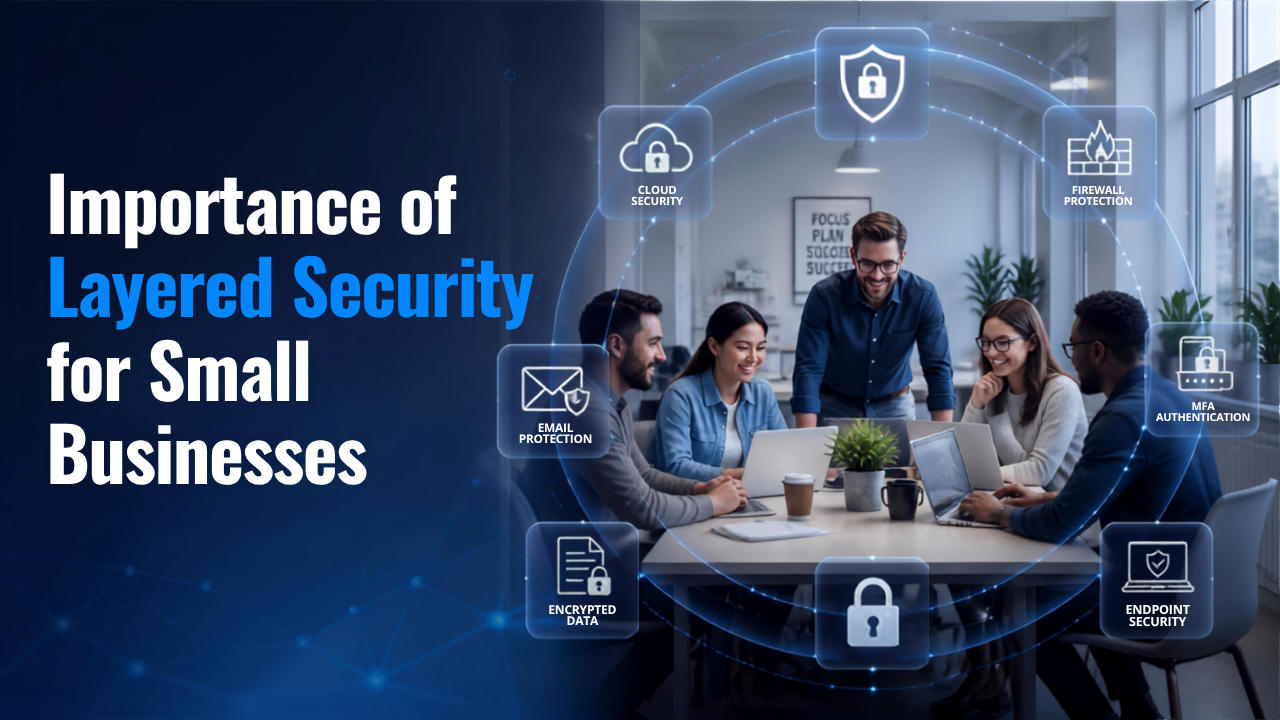
Small businesses are no longer flying under the radar of cybercriminals. In fact, many attackers see them as easier targets because they often operate with limited budgets, lean IT teams, and fewer cybersecurity resources. There’s also a common misconception that only large corporations need to worry about cyberattacks. The reality is quite different. A phishing email, stolen password, or ransomware attack can disrupt operations, expose customer data, and result in significant financial losses for businesses of any size. At the same time, relying on a single security solution, whether it’s antivirus software, a firewall, or email filtering, is no longer enough to defend against today’s evolving threats.
The idea behind layered security for small businesses is simple: no single security control is foolproof. Instead of depending on one tool to stop every attack, businesses combine multiple security measures so that if one layer fails, another can help detect, block, or limit the damage. The goal isn’t to create an unbreakable defense but to reduce risk, strengthen resilience, and keep the business running when cyber incidents occur. As cyber threats continue to evolve, adopting a layered approach has become one of the most practical and cost-effective ways for small and medium businesses to strengthen their cyber defenses.
This article explores why layered security for small businesses matters, why a single line of defense is no longer enough, and how a layered approach can help businesses better protect their people, data, and day-to-day operations.
Key Takeaways
- Layered security for small businesses uses multiple security controls to reduce cyber risks.
- No single security solution can protect against every cyber threat.
- Small businesses are frequent targets because attackers often exploit weak security and limited IT resources.
- Layered security combines people, processes, and technology to create multiple lines of defense.
- Essential security layers include identity protection, email security, endpoint security, network security, data protection, and employee awareness.
- If one security layer fails, another can help detect, block, or contain the attack.
- Affordable measures such as multi-factor authentication (MFA), regular backups, software updates, and employee training significantly strengthen cybersecurity.
- A layered approach helps reduce downtime, protect customer data, and improve business resilience.
- Cybersecurity is an ongoing process that should evolve as your business grows and new threats emerge.
- Investing in layered security for small businesses is an investment in business continuity, customer trust, and long-term success.
What Is Layered Security?
Layered security for small businesses is a cybersecurity strategy that combines multiple security measures to protect people, devices, networks, applications, and data. Instead of relying on a single tool to stop every cyberattack, businesses deploy several security controls that work together. If one layer is bypassed, the next layer can help detect, block, or contain the threat before it causes significant damage. This approach is commonly known as defense in depth, a long-established cybersecurity principle that assumes no single security control is perfect.
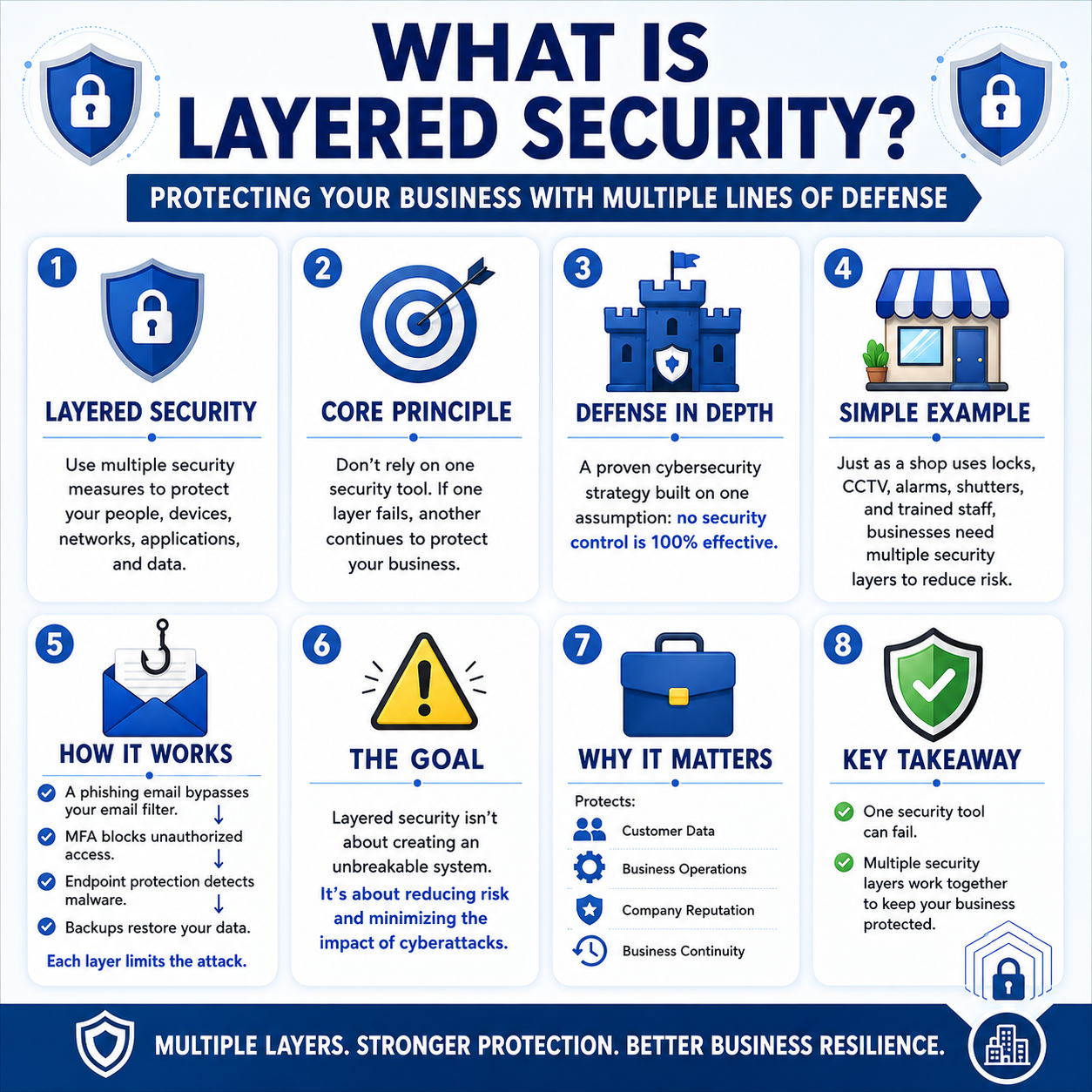 A simple way to understand defense in depth is to think about securing a neighborhood retail store. The owner doesn’t depend on just one lock to protect the business. They install sturdy door locks, CCTV cameras, an alarm system, security shutters, and adequate lighting outside the premises. Employees are also trained to recognize suspicious behavior and follow procedures when opening or closing the store. If someone manages to bypass one security measure, the remaining layers continue to reduce the chances of a successful break-in.
Cybersecurity works in much the same way. A phishing email might evade an email filter, but multi-factor authentication (MFA) can prevent unauthorized access if passwords are stolen. If malware reaches an employee’s computer, endpoint protection can detect suspicious activity, while regular backups help restore critical business data if ransomware encrypts files. Each layer addresses a different risk, making it much harder for attackers to achieve their objective.
For small and medium businesses, the objective of layered security isn’t to create an impenetrable defense. Cybersecurity professionals often work on the assumption that no organization is immune to cyber threats. Instead, the goal is to reduce risk, minimize the impact of an attack, and help the business recover quickly if an incident occurs. This practical mindset makes layered security for small businesses one of the most effective and cost-conscious approaches to strengthening overall cyber resilience.
Why Small Businesses Need More Than One Line of Defense
Many small business owners believe their company is too small to attract cybercriminals. Others assume that installing antivirus software or a firewall is enough to keep their business safe. Unfortunately, today’s cyber threats don’t work that way. Attackers look for weaknesses, not business size. A single security tool can help, but it can’t defend against every type of attack. That’s why layered security for small businesses has become an essential part of modern cybersecurity for small businesses.
- Cyberattacks Don’t Discriminate by Business Size
Cybercriminals don’t just target multinational corporations. Small and medium businesses are increasingly targeted because they often have fewer cybersecurity resources and may lack dedicated IT teams. Many attacks are automated, with cybercriminals scanning thousands of businesses for weak passwords, outdated software, or exposed systems. Once they find a vulnerability, the size of the business becomes far less important than the opportunity to exploit it.
- Limited Budgets Mean Every Security Investment Must Count
Most small businesses don’t have the budget to invest in enterprise-grade cybersecurity solutions. That makes it even more important to choose security measures that provide the greatest value. Layered security for small businesses doesn’t mean purchasing every available security product. Instead, it focuses on combining affordable tools such as multi-factor authentication (MFA), endpoint protection, email filtering, password managers, and regular backups with good security practices. Together, these layers provide stronger small business cyber defense than any single solution can offer.
- One Successful Attack Can Disrupt an Entire Business
For a small business, even one successful cyberattack can have serious consequences. Ransomware can prevent employees from accessing critical files. A business email compromise (BEC) attack can lead to fraudulent payments. A data breach can interrupt operations, create unexpected recovery costs, and damage the company’s reputation. Unlike larger organizations with dedicated incident response teams, many small businesses have fewer resources to recover quickly. This is why defense in depth is so important. If one security control fails, another can help reduce the impact and keep the attack from escalating.
- Employees Are the First Line of Defense
Technology alone can’t stop every cyber threat. Many cyberattacks begin when an employee clicks a phishing link, downloads a malicious attachment, or unknowingly shares login credentials. While security tools play an important role, employee awareness adds another critical layer of protection. Regular cybersecurity awareness training helps employees recognize suspicious emails, create stronger passwords, and report unusual activity before it becomes a serious security incident. In many cases, informed employees can prevent attacks that automated tools might miss.
- Cloud Services Need Protection Too
Many small businesses rely on cloud-based services such as Microsoft 365, Google Workspace, customer relationship management (CRM) platforms, accounting software, and cloud storage. Although cloud providers secure their own infrastructure, businesses remain responsible for protecting their user accounts, data, and access permissions. Enabling MFA, reviewing user access regularly, and monitoring account activity are all important layers that strengthen SMB cybersecurity in cloud environments.
- Customers Expect Their Data to Be Protected
Whether you run an online store, a medical practice, a law firm, or a local service business, your customers trust you with sensitive information. They expect that information to be handled responsibly and protected from unauthorized access. A cyberattack that exposes customer data can erode that trust and affect future business. By adopting cybersecurity best practices, including a layered security approach, small businesses not only reduce cyber risks but also demonstrate their commitment to protecting customer information and maintaining business continuity.
How Layered Security Protects Your Business
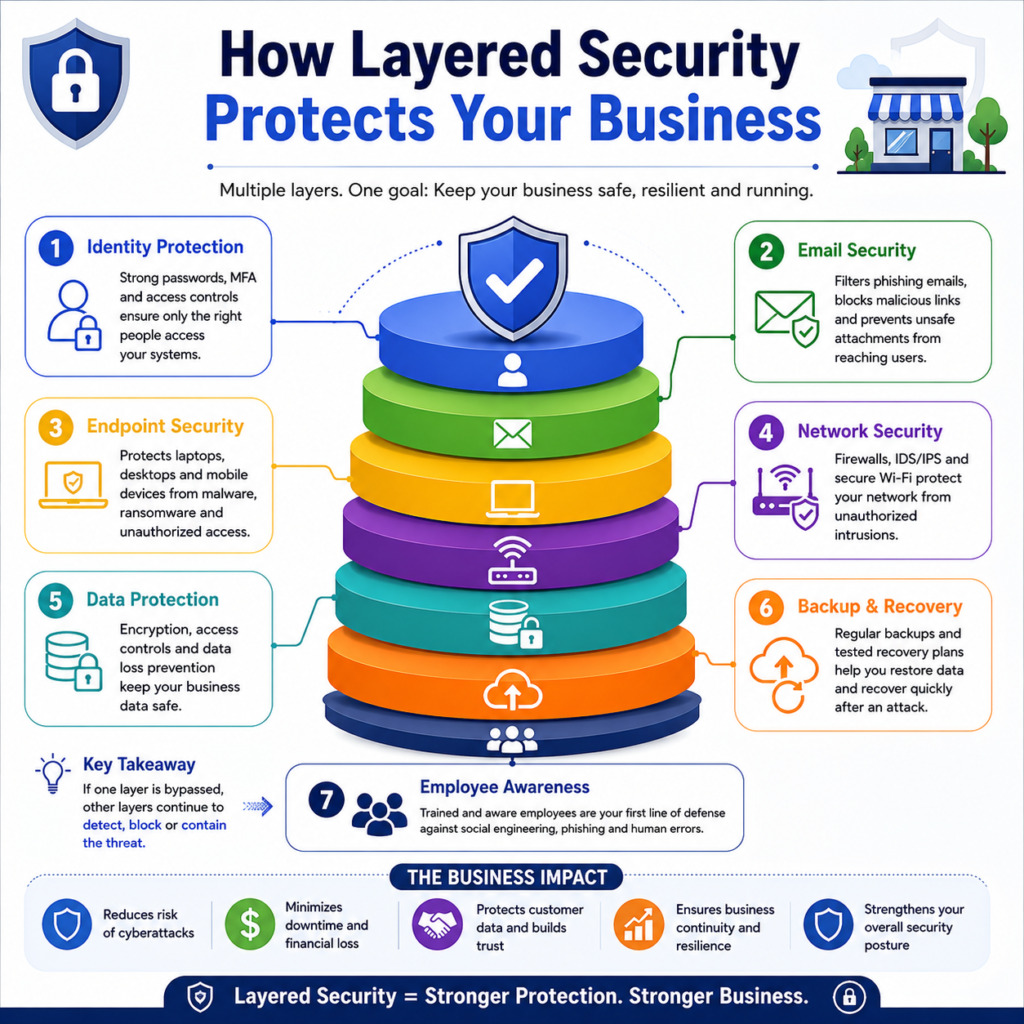
Every cyberattack follows a different path. Some begin with a phishing email, while others exploit stolen passwords, vulnerable software, or unsecured devices. This is why layered security for small businesses doesn’t rely on a single security product. Instead, it combines multiple security controls that work together to reduce risk. If one layer is bypassed, another can detect, stop, or limit the impact of the attack.
- Identity Protection Stops Unauthorized Access
Business accounts are among the most valuable targets for cybercriminals. Once attackers gain access to an email account or cloud application, they may steal sensitive information, impersonate employees, or move deeper into the business network. Strong passwords are the first line of defense, but passwords alone are no longer enough. Many passwords are stolen through phishing attacks or exposed in previous data breaches. Enabling multi-factor authentication (MFA) adds another layer of verification, making it much harder for attackers to access accounts even if they know the password.
Another important practice is role-based access control (RBAC). Employees should only have access to the systems and data they need to perform their jobs. Limiting access reduces the chances of accidental data exposure and helps contain an attack if an account is compromised.
- Email Security Helps Block Phishing Attacks
Email remains one of the most common ways cybercriminals target small businesses. Attackers disguise malicious emails as invoices, delivery notifications, payment requests, or messages from trusted suppliers. Spam filters and anti-phishing tools help identify many suspicious emails before they reach employees. However, no email security solution is perfect. Safe email practices, such as verifying unexpected requests, checking sender addresses carefully, and avoiding suspicious attachments or links, add another layer of protection.
When email security technology and employee awareness work together, businesses are better prepared to defend against phishing attacks.
- Endpoint Security Protects Business Devices
Every laptop, desktop, smartphone, and tablet connected to your business network is an endpoint. These devices often store sensitive information or provide access to cloud applications, making them attractive targets for attackers. Modern endpoint protection goes beyond traditional antivirus software. Endpoint Detection and Response (EDR) solutions continuously monitor devices for suspicious activity and help identify threats that signature-based antivirus software may miss. Keeping operating systems and applications updated is equally important because many cyberattacks exploit known software vulnerabilities. Device encryption provides another layer by protecting business data if a laptop or mobile device is lost or stolen.
- Network Security Keeps Intruders Out
A secure network helps prevent unauthorized users from accessing business systems. Firewalls monitor incoming and outgoing traffic, blocking suspicious connections before they reach internal devices. Businesses should also secure wireless networks with strong passwords and modern encryption standards. For employees working remotely, a Virtual Private Network (VPN) encrypts internet traffic, reducing the risk of attackers intercepting sensitive business information over public Wi-Fi networks. These network security measures work together to create another protective layer around business operations.
- Data Protection Keeps Business Information Safe
Business data is one of an organization’s most valuable assets. Customer records, financial information, contracts, and intellectual property all require appropriate protection. Regular backups are essential because they allow businesses to restore important files after ransomware attacks, accidental deletion, or hardware failures. Encrypting sensitive data helps prevent unauthorized access, while secure cloud storage protects information stored outside the office. For many small businesses, having reliable backups can mean the difference between recovering quickly and experiencing prolonged downtime.
- Employee Awareness Adds a Human Layer of Defense
Technology alone can’t stop every cyberattack. Employees make decisions every day that can either strengthen or weaken business security. Regular cybersecurity awareness training helps employees recognize phishing emails, create stronger passwords, browse safely, and report suspicious activity before it escalates into a larger incident. Clear reporting procedures also encourage employees to speak up when something doesn’t seem right. Rather than viewing employees as the weakest link, businesses should see them as an important part of their layered security strategy. When supported by the right tools, processes, and training, employees become another layer of defense against evolving cyber threats.
Benefits of Layered Security for Small Businesses
Implementing layered security for small businesses isn’t just about reducing cyber risks. It also helps businesses operate with greater confidence, maintain customer trust, and recover more quickly when incidents occur. By combining multiple security controls, small businesses can build resilience without relying on a single tool or expensive enterprise solutions.
- Reduces the Risk of Costly Cyberattacks
Cyberattacks can result in financial losses, operational disruption, legal expenses, and unexpected recovery costs. Since no single security solution can stop every threat, a layered approach reduces the chances of attackers successfully compromising business systems. Even if one security control is bypassed, additional layers help detect, block, or contain the attack before it causes widespread damage.
- Minimizes Business Downtime
Downtime affects employee productivity, customer service, and revenue. Whether the disruption is caused by ransomware, a phishing attack, or a compromised device, layered security helps limit the impact. Faster detection and multiple security controls allow businesses to respond more effectively and resume normal operations sooner.
- Improves Recovery from Ransomware and Other Incidents
While no security strategy can guarantee complete protection, layered security improves a business’s ability to recover from cyber incidents. Regular backups, endpoint protection, and incident response procedures help restore critical systems and data without starting from scratch. For many small businesses, faster recovery can make the difference between a temporary setback and a prolonged business interruption.
- Builds Customer Trust and Protects Business Reputation
Customers trust businesses with sensitive information, including personal details, payment data, and confidential documents. Demonstrating a commitment to cybersecurity best practices reassures customers that their information is handled responsibly. Strong security measures also reduce the likelihood of data breaches that can damage a company’s reputation and customer relationships.
- Supports Compliance and Business Requirements
Many industries require businesses to safeguard customer information and follow specific cybersecurity or privacy requirements. Even when compliance isn’t legally mandated, clients and business partners increasingly expect vendors to demonstrate responsible security practices. A layered security strategy helps businesses meet these expectations while reducing operational risks.
- Strengthens Long-Term Business Resilience
Cyber threats continue to evolve, and small businesses often adopt new technologies as they grow. A layered security approach provides a flexible foundation that can adapt to changing business needs. Instead of relying on one security product, businesses develop a security mindset that combines technology, processes, and employee awareness. This makes the organization better prepared to respond to future threats while supporting sustainable growth.
To Sum Up
Cyber threats are no longer limited to large organizations. Small and medium businesses face the same risks but often have fewer resources to recover from an attack. That’s why relying on a single security solution is no longer enough. Layered security for small businesses brings together multiple security measures that work as a team. If one layer fails, another helps reduce the impact of the attack. While no security strategy can eliminate every risk, a layered approach helps protect your business, customer data, and reputation, making it an essential part of modern cybersecurity for small businesses.
Frequently Asked Questions
1. What is layered security for small businesses?
Layered security for small businesses is a cybersecurity approach that uses multiple security controls to protect business systems, data, and users. Instead of relying on one solution, it combines measures such as multi-factor authentication (MFA), email security, endpoint protection, firewalls, backups, and employee awareness to reduce cyber risks.
2. Why is layered security important for small businesses?
Small businesses are increasingly targeted by cybercriminals because they often have limited cybersecurity resources. Layered security reduces the risk of successful attacks by ensuring that if one security control fails, other layers continue to protect the business.
3. Isn’t antivirus software enough to protect my business?
No. Antivirus software is only one component of a broader cybersecurity strategy. Modern cyber threats, including phishing attacks, ransomware, and business email compromise, often require additional protection such as MFA, email filtering, regular software updates, secure backups, and employee training.
4. What are the essential layers of security every small business should have?
Every small business should consider identity protection, email security, endpoint protection, network security, data protection, and employee cybersecurity awareness as the foundation of a layered security strategy.
5. Is layered security expensive to implement?
Not necessarily. Many effective security measures, including MFA, password managers, automatic software updates, regular data backups, and employee awareness training, are affordable and provide significant protection without requiring enterprise-level budgets.
6. Can layered security help protect against ransomware?
Yes. While no solution can guarantee complete protection, layered security reduces the likelihood and impact of ransomware attacks. Endpoint protection, timely software updates, secure backups, email security, and employee awareness work together to help prevent infections and support faster recovery.
7. How often should small businesses review their cybersecurity measures?
Small businesses should review their cybersecurity measures at least once a year and whenever significant changes occur, such as adopting new software, hiring employees, expanding operations, or responding to emerging cyber threats. Regular reviews help ensure that security controls remain effective.
8. What’s the difference between layered security and defense in depth?
The terms are closely related and are often used interchangeably. Defense in depth is the cybersecurity principle of using multiple, overlapping security controls. Layered security is the practical implementation of that principle, combining people, processes, and technology to reduce risk and improve resilience.