Latest Cyber Attacks in 2026 January: What’s Happening and Why It Matters

Share
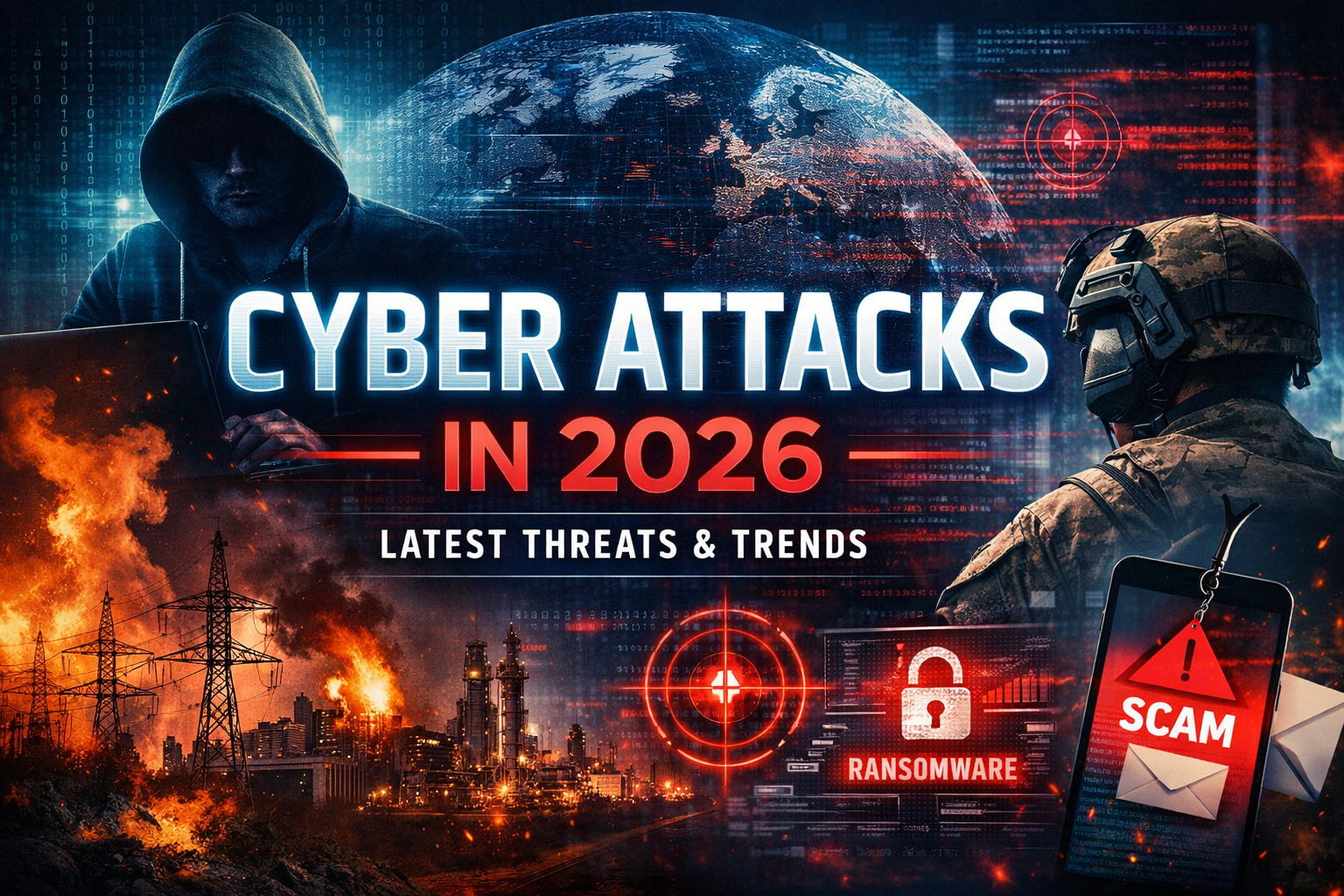
Cyber attacks in 2026 aren’t random anymore. They’re frequent, disruptive, and increasingly strategic. Hackers are hitting big brands, critical infrastructure, and everyday people. Governments, law enforcement, and security teams are scrambling to keep up.
TL;DR
- Nike is investigating a suspected 1.4 TB data breach after hackers published internal files. (Reuters)
- Malware and cyber attacks continue to target energy infrastructure in Europe. (The Cyber Beat)
- PLUGGYAPE malware spread via messaging apps targets defense forces. (Security Affairs)
- Ransomware is more frequent and sophisticated in 2026. (Recorded Future)
- Cyber fraud and scams are rising sharply in India and other countries. (The Times of India)
Here’s the full picture of what’s happening right now.
Corporate Breaches Are Getting Bigger
One of the biggest stories so far in 2026 involves Nike. Hackers claiming to be the WorldLeaks group say they stole 1.4 terabytes of internal Nike data. Nike confirmed it’s investigating a potential data breach, though it hasn’t said whether customer or employee information was affected. The company is assessing the situation and trying to verify the claim. (Reuters)
Read more:
- Nike says it is investigating a possible breach after hackers claim a 1.4TB leak. Nike investigating possible data breach (Reuters)
- Nike investigating mega breach claim after alleged leak of internal files. Nike mega security breach claim (TechRadar)
This incident shows how attackers now focus less on classic ransomware and more on stealing internal business data. That data can be used for extortion, competitive disadvantage, or future attacks.
Critical Infrastructure Targeted by Destructive Malware
Cyber attacks on energy and critical infrastructure continue to rise. In late 2025, Russian-linked hacking groups launched a malware attack against Poland’s power systems using a destructive strain known as DynoWiper. Though major outages were avoided, the attack hit nearly 30 energy facilities and showed how modern threats aim to disrupt essential services. (The Cyber Beat)
Read more:
- Cyberattack on Polish energy grid impacted around 30 facilities. Poland energy grid cyberattack news
This reflects a larger trend where nation-state actors target power, utilities, and transport networks — systems that have real-world consequences when disrupted.
Evolving Malware Campaigns: PLUGGYAPE Targets Defense Forces
A new malware campaign known as PLUGGYAPE has been used in targeted attacks against Ukrainian defense forces. The malware is distributed through instant messaging platforms like Signal and WhatsApp, often disguised as charity or official information links. (Security Affairs)
Read more:
- CERT-UA reports PLUGGYAPE attacks targeting Ukrainian defense forces. PLUGGYAPE malware attacks on defense forces (SecurityAffairs)
- PLUGGYAPE malware spreads via messaging apps. PLUGGYAPE malware via Signal and WhatsApp (The Hacker News)
This type of social engineering paired with malware delivery shows attackers are exploiting trusted communication tools to bypass defenses.
Ransomware Keeps Evolving
Ransomware attacks continue to rise in 2026. According to industry summaries, ransomware groups are launching more attacks than ever, and they aren’t just encrypting files. Many now steal data first and threaten to leak it publicly unless a ransom is paid. (Recorded Future)
These tactics reflect a broader shift:
- Ransomware attacks increased significantly in recent years.
- Attackers bundle services like DDoS with extortion.
- Insider recruitment attempts are rising to aid ransomware campaigns. (Recorded Future)
There’s no single global list of every ransomware hit yet, but tracking sites and threat summaries have counted thousands of reported victims across industries and geographies. (SharkStriker)
Everyday Cyber Fraud Is Rising — Especially in India
Not all threats are high-profile breaches or malware campaigns. Cyber fraud continues to cost ordinary people and small businesses huge amounts of money.
In Madhya Pradesh, India, the launch of the e-Zero FIR system has coincided with a sharp increase in cyber fraud reports. Over 350 digital FIRs have been converted into regular cases, often involving online investment scams where victims were misled into transferring large sums. (The Times of India)
Read more:
- City’s e-Zero FIR system rings alarm as cyber frauds surge. Cyber fraud surge in India (Times of India)
Nationwide, cyber fraud cases — including online trading scams, fake job offers, and bogus financial apps — are being reported frequently. In Pune alone, victims lost millions in trading-related scams that were registered with the cyber police recently. (The Times of India)
These frauds often use social media ads, WhatsApp groups, and fake promises of quick profits to lure victims. They show how attackers combine social engineering with digital channels to target individuals.
What This Means for Your Digital Safety
Cyber threats in 2026 are broader than ever. A few key takeaways for businesses and individuals:
- Internal data is as high-value as customer data. Attackers know it can be used for extortion or industrial espionage.
- Critical systems are targets. Energy, healthcare, transport, and government networks face advanced threats.
- Messaging and social channels are exploited. Attackers use platforms people trust to deliver malware.
- Fraud hits everyday users. Scams continue to outnumber high-profile breaches and often rely on persuasion, not sophisticated code.
The solution isn’t just technical. It’s also awareness, training, verification, and verification again before clicking links or sharing information.
FAQs: Latest Cyber Attacks and Threats in 2026
What types of cyber attacks are most common in 2026?
Ransomware, data theft, malware via messaging apps, and investment and fraud scams remain the most active forms. (Recorded Future)
Are personal users still at risk?
Yes. Scams, phishing, fake apps, and social engineering campaigns target individuals just as much as companies. (The Times of India)
How are attackers delivering malware lately?
Attack vectors include email attachments, fake links, and instant messaging platforms like Signal and WhatsApp. (Security Affairs)
How can I protect myself from fraud?
Be cautious of unsolicited offers, verify sources, avoid clicking unknown links, and use strong authentication everywhere. (en.wikipedia.org)
What should businesses focus on for defense?
Regular patching, employee training, network segmentation, incident response plans, and threat intelligence monitoring. (Recorded Future)