Stryker Cyberattack Disrupts Global Operations as Experts Warn of Rising Recovery Costs

Share
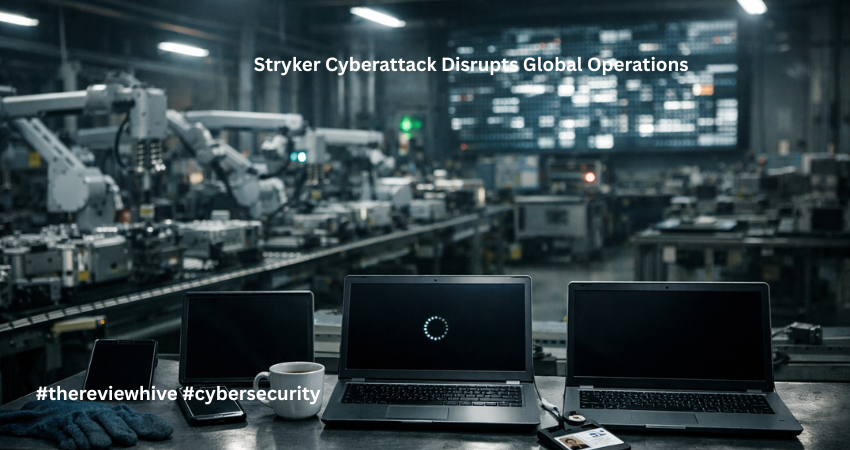
The Stryker cyberattack has raised concerns across the healthcare technology sector after a destructive intrusion disrupted internal systems and wiped thousands of employee devices. Although the company has contained the incident, cybersecurity experts warn that the cost of recovery and system restoration could be significant.
Stryker is one of the world’s largest medical technology companies. It manufactures surgical equipment, orthopedic implants, and hospital devices used by healthcare providers worldwide. Because of its global reach, even a temporary disruption in its operations can have ripple effects across healthcare supply chains.
The company confirmed that the cyberattack affected internal corporate systems, slowing manufacturing and operational processes. However, the organization also stated that medical devices and patient systems were not impacted, allowing hospitals and healthcare providers to continue operating without interruption.
The incident highlights a growing concern in cybersecurity. Modern cyberattacks are increasingly designed to disrupt operations rather than simply steal data or demand ransom payments.
TL;DR
- The Stryker cyberattack disrupted internal corporate systems and wiped thousands of employee devices.
- Manufacturing, shipping, and operational systems were temporarily affected.
- Medical devices and patient care systems were not impacted.
- A hacker group called Handala claimed responsibility for the attack.
- Experts warn that recovery costs and operational repair could be substantial.
What Happened in the Stryker Cyberattack
The cyberattack targeted Stryker’s corporate IT infrastructure, reportedly affecting systems connected to its Microsoft-based environment. Once the intrusion occurred, several internal systems stopped functioning normally.
As a result, key operational activities slowed down, including:
- Order processing
- Manufacturing coordination
- Product shipping and logistics
These disruptions created operational challenges for a company that supports hospitals and surgical centers worldwide.
Reports also suggest that attackers gained access to the company’s mobile device management (MDM) system, which controls employee laptops, phones, and other corporate devices. Through this access, the attackers allegedly issued commands that remotely wiped thousands of employee devices.
While attackers claimed that more than 200,000 devices were affected, other estimates suggest the number may be closer to 80,000 devices globally.
Hacker Group Claims Responsibility
A hacking group known as Handala publicly claimed responsibility for the cyberattack. Security analysts believe the group may have connections to Iranian cyber operations. The group posted messages online suggesting the attack was politically motivated and carried out as retaliation linked to geopolitical tensions.
However, attribution in cyber incidents is complex. Security researchers typically require detailed forensic analysis before confirming the identity of the attackers. Investigators are still examining the incident to determine exactly how the attackers gained access to the internal systems.
A Destructive Attack Instead of Ransomware
Most corporate cyberattacks today involve ransomware, where attackers encrypt systems and demand payment to restore access. But the Stryker incident appears different. Security researchers say the attack showed signs of a destructive cyber operation, where the goal is to damage systems and disrupt operations rather than collect ransom payments. There has been no confirmed evidence of ransomware deployed in the attack. Instead, the focus appears to have been on wiping devices and interfering with corporate infrastructure. This type of cyberattack is becoming more common in politically motivated operations, where the goal is disruption rather than financial gain.
Why Recovery Could Be Expensive
Even though the cyberattack has been contained, restoring operations in a large global company can take significant time and resources.
Recovery efforts typically include:
- Device rebuilding – If thousands of devices were wiped, they must be reconfigured, updated, and reconnected to the corporate network.
- System restoration – Core systems such as identity management, corporate applications, and network infrastructure must be validated before being fully restored.
- Security investigations –Cybersecurity teams must conduct forensic investigations to determine how the attack occurred and ensure attackers no longer have access.
- Infrastructure upgrades – Organizations often strengthen security after an attack by implementing additional protections, monitoring tools, and identity controls.
For a company with tens of thousands of employees and operations in dozens of countries, these processes can take weeks or even months.
Impact on the Healthcare Supply Chain
Healthcare technology companies like Stryker play a critical role in hospital supply chains.
They manufacture and distribute equipment such as:
- surgical tools
- orthopedic implants
- hospital equipment
- medical robotics systems
Even short disruptions in manufacturing or shipping systems can slow delivery of critical medical supplies. Fortunately, the company confirmed that patient care systems and medical devices were not affected, which reduced the potential risk to hospitals. However, the incident demonstrates how cyberattacks on medical suppliers can indirectly affect healthcare services.
Key Statistical Data
Healthcare cyberattacks are increasing globally
- Healthcare organizations experienced over 725 cyber incidents in 2024
- The sector remains one of the most targeted industries for cybercrime
Operational disruption is a growing attack strategy
- Nearly 40% of major cyberattacks now focus on operational disruption rather than data theft
Healthcare breach costs remain the highest
- The average cost of a healthcare data breach is $10.93 million, the highest across all industries
These trends show why cyber resilience has become critical for healthcare technology providers.
Security Insights for Healthcare Organizations
- Device management systems can become high-impact attack points
Reports indicate the attackers may have gained access to Stryker’s mobile device management system. From there, they were able to issue commands that wiped thousands of employee devices. This shows how powerful these platforms are. If attackers compromise them, they can control or disable a large portion of an organization’s endpoint infrastructure almost instantly.
- Corporate IT disruption can affect manufacturing operations
The attack targeted internal corporate systems rather than medical devices. However, the disruption slowed manufacturing coordination, order processing, and shipping activities. This highlights how corporate IT systems are deeply tied to operational workflows in modern global companies.
- Healthcare supply chains depend on large enterprise networks
Stryker manufactures surgical equipment and hospital technology used worldwide. Even though patient systems were not affected, disruptions in the company’s internal systems could still influence manufacturing schedules and delivery timelines for medical equipment.
- Destructive attacks are becoming more common
The incident appears to have involved device wiping and operational disruption rather than ransomware. This suggests the goal was damage and disruption rather than financial extortion. Such attacks are often linked to geopolitical motivations.
- Large enterprises face complex recovery challenges
With tens of thousands of employees and devices across multiple countries, rebuilding systems after a destructive cyberattack can take time. Restoring wiped devices, verifying infrastructure security, and conducting forensic investigations all contribute to lengthy recovery efforts.
To Sum Up
The Stryker cyberattack demonstrates how destructive cyber operations can disrupt global companies even when patient systems remain safe. Although the attack has been contained, the process of restoring devices, rebuilding systems, and strengthening security could take time and significant financial investment. As cyber threats evolve, healthcare technology companies must continue improving their resilience to ensure that critical medical supply chains remain stable and secure.
FAQs
What is the Stryker cyberattack?
The Stryker cyberattack was a destructive cyber intrusion that disrupted internal corporate systems and reportedly wiped thousands of employee devices.
Were Stryker medical devices affected?
No. The company confirmed that medical devices and patient systems were not impacted by the attack.
Who carried out the cyberattack?
A hacking group known as Handala claimed responsibility. Investigations are still ongoing to confirm attribution.
Was ransomware used in the attack?
No confirmed ransomware has been identified. The attack appears to have focused on system disruption rather than extortion.
Why could recovery costs be high?
Recovery requires rebuilding thousands of devices, restoring corporate systems, conducting forensic investigations, and strengthening cybersecurity infrastructure.