Stryker Cyber Attack Disrupts Cork Facility, Suspected Wiper Malware Knocks 4,000 Employees Offline

Share
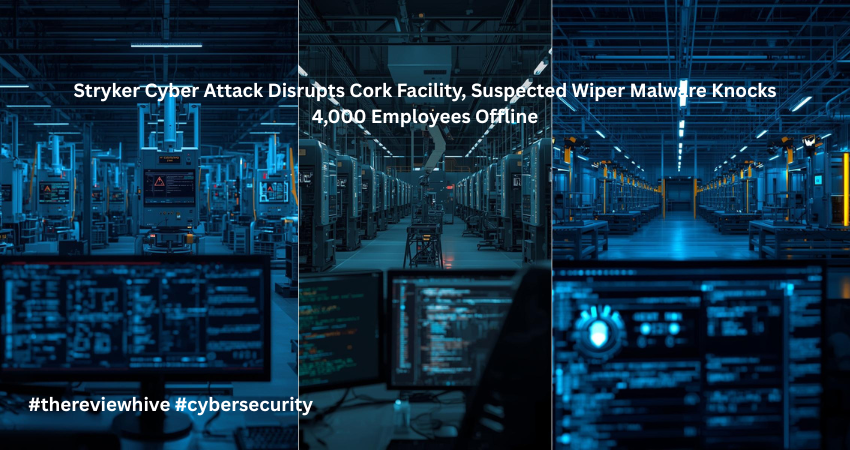
A suspected cyber-attack on Stryker Corporation, one of the world’s largest medical technology manufacturers, has disrupted operations at its major facility in Cork, Ireland. Early reports suggest the incident may involve wiper malware, a destructive form of cyber-attack designed to erase data and disable systems rather than generate ransom payments. The disruption reportedly forced around 4,000 employees offline, raising concerns about operational continuity and the security of global medical device manufacturing infrastructure. The attack highlights a growing pattern in cybersecurity where geopolitical tensions and hacktivist groups increasingly target private companies that play critical roles in global supply chains.
TL;DR
- A cyber-attack disrupted systems at Stryker’s Cork facility.
- Around 4,000 employees reportedly lost access to internal systems.
- Early indicators suggest the use of wiper malware, which destroys data instead of encrypting it.
- A hacker group linked to Iranian cyber operations is suspected.
- The incident raises concerns about cyber-attacks targeting healthcare manufacturing and global supply chains.
What Happened in the Stryker Cyber Attack
The incident began when employees at the Cork facility suddenly lost access to company systems. Corporate laptops, communication tools, and internal networks stopped functioning across multiple departments.
Workers reportedly found themselves locked out of internal systems within minutes. IT teams responded by isolating affected systems to prevent further spread of the attack.
Cork is one of Stryker’s most important manufacturing locations outside the United States. The facility produces and supports several medical technology products used by hospitals and healthcare providers around the world.
Because of its role in production and logistics, a disruption at this site has the potential to affect multiple parts of the global medical device supply chain.
Suspected Wiper Malware Attack
Early indicators suggest the attackers may have deployed wiper malware. Unlike ransomware attacks that encrypt data and demand payment, wiper malware is designed to destroy systems completely. It typically overwrites or deletes files, corrupts disk structures, and prevents operating systems from functioning.
Once triggered, the malware can render entire networks unusable. Organizations hit by wiper attacks often face longer recovery periods because rebuilding systems from scratch becomes necessary. In incidents like this, the attackers usually aim to disrupt operations rather than profit financially.
Iranian-Linked Hacktivist Group Suspected
Reports indicate that cybersecurity analysts are investigating possible links to the Handala hacker group, a hacktivist collective that has previously claimed cyber operations against Western and Israeli targets. The group has been active in recent years and often publishes evidence of attacks through online channels after carrying them out. Security researchers believe the group may operate with informal links to Iranian cyber operations, though direct attribution in cyber incidents remains complex and often takes months to confirm.
Groups like Handala typically focus on:
- Disruptive cyber operations
- Data leaks and information exposure
- Symbolic attacks on large organizations
If confirmed, the Stryker incident would fit a broader pattern of politically motivated cyber attacks targeting major companies.
Why Medical Device Companies Are Increasingly Targeted
Healthcare organizations and medical technology manufacturers have become attractive targets for cyber attackers. Several factors contribute to this trend.
- Critical infrastructure role
Medical device manufacturers support hospitals, clinics, and surgical centers worldwide. Disrupting production or logistics can create ripple effects across healthcare systems.
- Complex digital ecosystems
Large manufacturers rely on connected systems across manufacturing, logistics, engineering, and supply chain management. A breach in one part of the network can quickly affect other operations.
- High operational pressure
Healthcare infrastructure cannot afford extended downtime. Attackers know organizations may struggle to halt operations even during cyber incidents.
Operational Impact
The immediate impact of the attack appears to be significant. Reports indicate that thousands of employees were unable to access company devices and systems. Internal communication platforms also experienced outages. In response, affected employees were reportedly instructed to disconnect devices from the network while security teams began investigating the attack. The disruption has raised concerns about possible delays in medical device production, although the full operational impact is still being assessed. At the time of writing, the company continues to work with cybersecurity specialists to restore systems and determine the scope of the attack.
Wiper Malware and Cyber Warfare
Wiper malware has increasingly appeared in state-linked cyber conflicts. Unlike financially motivated cybercrime, wiper attacks are often used to cause maximum disruption. They aim to erase data, disable systems, and create long recovery timelines. Such attacks have previously targeted infrastructure sectors including energy, transportation, and government agencies. The suspected use of wiper malware in this case suggests the attackers may have intended to cause operational damage rather than demand ransom payments.
What Investigators Are Looking At
Cybersecurity investigators will now focus on several key questions:
- How attackers initially accessed the network
- Whether the malware spread across multiple facilities
- Whether sensitive data was accessed or destroyed
- How long full system restoration will take
Digital forensics teams typically analyze system logs, malware samples, and network activity to reconstruct the timeline of the attack. Attribution may take weeks or months depending on the complexity of the attack.
What This Incident Means for Global Cybersecurity
The Stryker incident reflects a larger shift in cyber threat patterns. Large corporations that operate critical infrastructure are increasingly viewed as strategic targets. Healthcare supply chains, manufacturing networks, and technology providers now sit at the intersection of business operations and geopolitical tensions. Organizations in these sectors must prepare for cyber incidents that aim not just to steal data, but to interrupt real-world operations.
To Sum Up
The Stryker Corporation cyber attack is a reminder that modern cyber incidents are no longer limited to data theft or ransomware. In this case, the suspected use of destructive malware reportedly forced thousands of employees offline at the company’s Cork facility, disrupting internal systems and raising concerns about the resilience of healthcare manufacturing infrastructure. As investigations continue, the incident highlights a larger shift in cyber threats. Critical industries such as healthcare technology are increasingly becoming targets of attacks designed to disrupt operations, not just steal information. For global companies that rely on connected systems and complex supply chains, cyber resilience is now a core part of operational stability.
FAQs
What is the Stryker cyber attack?
The Stryker cyber attack refers to a suspected destructive cyber incident that disrupted systems at Stryker Corporation, particularly at its major facility in Cork, Ireland. The attack reportedly forced thousands of employees offline and affected internal company systems.
When did the Stryker cyber attack happen?
Reports indicate the Stryker cyber attack occurred in March 2026, when employees suddenly lost access to corporate networks, communication tools, and company devices.
How many employees were affected in the Stryker cyber attack?
Approximately 4,000 employees at the Cork facility were reportedly unable to access internal systems after the cyber attack disrupted company networks.
Was wiper malware used in the Stryker cyber attack?
Early reports suggest the attackers may have used wiper malware, a destructive type of malware designed to erase data and disable systems rather than demand ransom payments.
Who is suspected behind the Stryker cyber attack?
Cybersecurity analysts are investigating possible links to the Handala hacker group, a hacktivist group believed by some researchers to have connections with Iranian cyber operations.
Why would hackers target Stryker?
Companies like Stryker play an important role in global healthcare supply chains. Disrupting their operations can create wider operational and economic impact, which may make them attractive targets for politically motivated cyber attacks.
Did the Stryker cyber attack affect medical device production?
The full impact is still being assessed. However, since the affected facility supports manufacturing operations, there are concerns that the disruption could temporarily affect production or logistics.