
70% of Meghalaya Cybercrime Cases Involve Fraud or Sexual Exploitation

Share
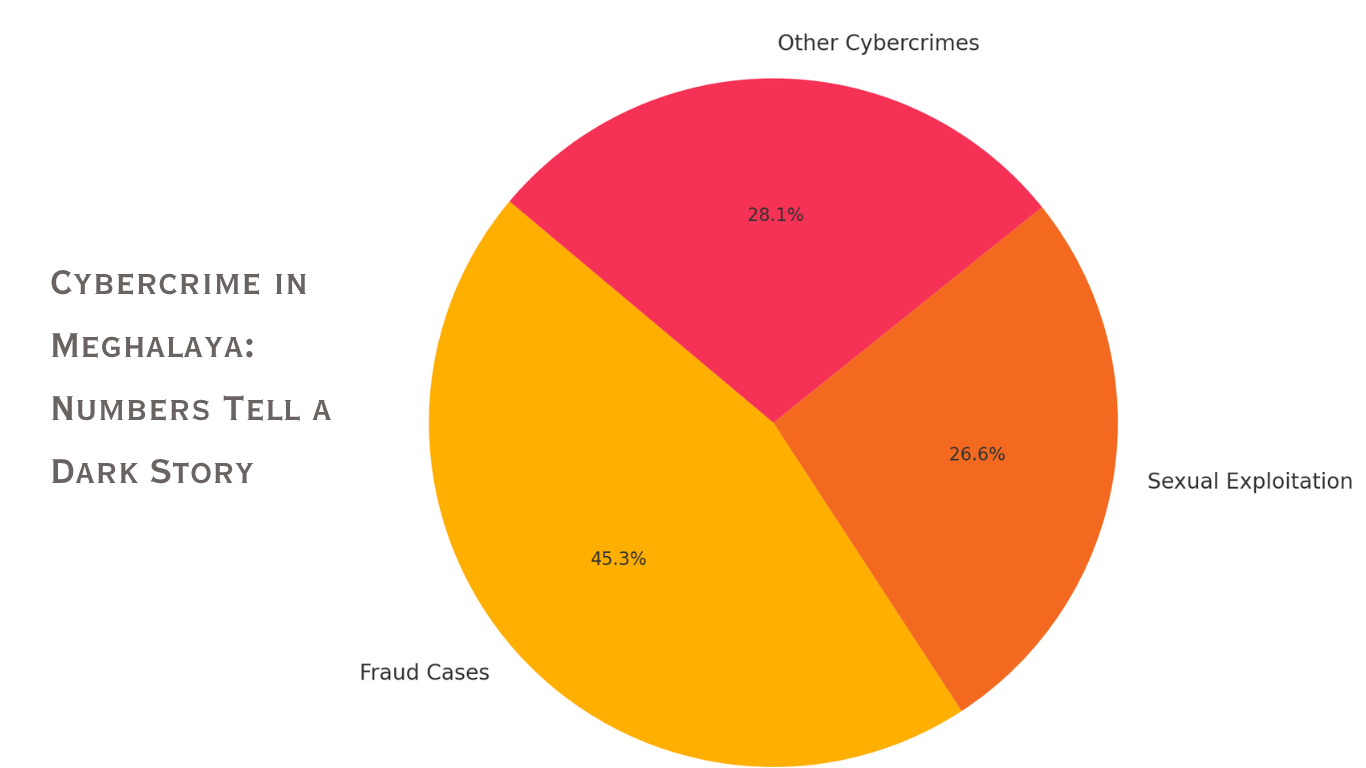
According to the National Crime Records Bureau (NCRB) 2023 report, Meghalaya recorded 64 cybercrime cases. Almost 70 percent of Meghalaya cybercrime cases involved fraud (29 cases) and sexual exploitation (17 cases). While the overall case numbers are modest, the pattern highlights a concerning trend. At the national level, fraud accounted for 68.9 percent of cybercrime, while sexual exploitation was just 4.9 percent, making Meghalaya’s rate of 26.6 percent notably higher.
Key Takeaways
- 70% of Meghalaya cybercrime cases in 2023 involved fraud and sexual exploitation, with exploitation rates far higher than the national average.
- Fraud (45.3%) and sexual exploitation (26.6%) dominate Meghalaya’s cybercrime profile, compared to 68.9% and 4.9% nationally.
- Underreporting remains a concern due to stigma, weak infrastructure, and low digital awareness, especially in remote areas.
- Strengthening cyber forensics, public awareness, and trust in law enforcement is critical to curb rising cybercrime in Meghalaya.
What the Data Reveals About Cybercrime in Meghalaya
The NCRB reported a 31.2 percent increase in cybercrime nationwide between 2022 and 2023. For Meghalaya, the issue isn’t just the rising number of cases but the disproportionate share of sensitive crimes like sexual exploitation. Experts warn that these numbers may understate the real picture, as underreporting remains a major issue.
Factors such as remote geography, weak internet infrastructure, and lack of trust in law enforcement discourage victims from filing complaints. Crimes tied to intimate material or personal fraud are even less likely to be reported due to shame, stigma, and fear of retaliation. This means cybercrime in Meghalaya may be more widespread than statistics suggest.
Comparing State and National Trends
Fraud dominates both state and national figures. But where India overall sees fraud as the primary cybercrime and sexual exploitation as relatively low, Meghalaya stands apart. With 26.6 percent of its cybercrime cases involving sexual exploitation, the state far exceeds the national share of 4.9 percent.
The broader crime context adds to the concern. In 2023, Meghalaya reported 628 crimes against women. Meanwhile, overall crime per lakh population rose from 422.2 in 2022 to 448.3 in 2023, showing a steady increase in both physical and digital offenses.
| Category (2023 NCRB Data) | Meghalaya Cybercrime Cases | National Cybercrime Cases (India) | Key Insight |
| Total Cybercrime Cases | 64 cases | 65,893 cases | Meghalaya has fewer absolute cases, but the share of sensitive crimes is higher. |
| Fraud | 29 cases (45.3%) | 68.9% of all cybercrime | Fraud dominates both state and national numbers. |
| Sexual Exploitation | 17 cases (26.6%) | 4.9% of all cybercrime | Meghalaya’s rate is over 5x higher than the national average. |
| Other Cybercrime | 18 cases (28.1%) | 26.2% | Comparable with national share. |
| Crimes Against Women (Overall, not just cyber) | 628 cases | ~4.45 lakh cases nationwide | Meghalaya’s figure is high relative to its small population. |
| Crime Rate per Lakh Population | Rose from 422.2 (2022) to 448.3 (2023) | National average: ~258.1 | Meghalaya’s per capita crime rate is significantly higher than India’s average. |
Challenges for Law Enforcement and Policy
Tackling cybercrime in Meghalaya is complex. Authorities face:
- Limited cyber forensic capabilities: Remote districts often lack specialized cyber cells or trained investigators.
- Low digital awareness: Many victims don’t recognize scams disguised as legitimate financial transactions or understand that non-consensual sharing of sexual content is a punishable cyber offense.
- Slow legal processes: Evidence can be lost, suspects escape jurisdiction, and trials drag on, weakening deterrence.
The situation calls for a dual approach: strengthening cyber infrastructure and expanding public awareness campaigns. Schools, colleges, and community groups need targeted education on online safety, fraud detection, and reporting mechanisms.
Implications for Meghalaya’s Digital Safety
The latest NCRB data shows that Meghalaya cybercrime cases aren’t just about numbers. They point to deeper risks in how technology is being used and misused across the state. Fraud remains widespread, but the unusually high rate of sexual exploitation online is alarming.
For citizens, this means greater vulnerability to scams, blackmail, and non-consensual content sharing. For law enforcement, it highlights the urgent need to build cyber forensic capacity, expand cyber cells to remote districts, and improve training.
Equally important is public education. Many people still don’t recognize digital fraud or know how to report it. Raising awareness about cybercrime in Meghalaya—especially among students, women, and rural communities—will be key to prevention.
If these issues are not addressed, the state risks a steady rise in both fraud and online exploitation. But if infrastructure, awareness, and trust are strengthened, Meghalaya can turn these warnings into an opportunity for safer digital spaces.