How to Choose a Cybersecurity Service Provider for Small Business

Share
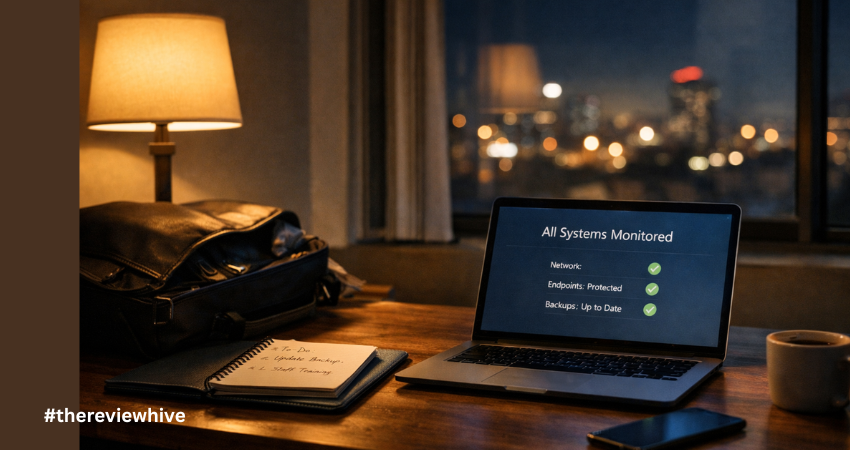
Cyber threats don’t just target large enterprises. Small businesses now operate in the same digital environment as global firms, but without the same level of internal security support. Choosing the right cybersecurity service provider for small business has become a core business decision, not a technical afterthought. The systems you rely on to run your business are now part of your risk surface. How you protect them shapes how resilient your business can be.
Cybersecurity today is not about chasing threats. It is about making sure your business can continue to function when pressure hits.
TL;DR
Small businesses face constant, automated cyber threats, even if they don’t see themselves as targets. Choosing the right cybersecurity service provider is less about tools and more about finding a reliable partner who offers ongoing monitoring, clear communication, and real incident support. The right approach focuses on visibility, readiness, and business continuity, not reactive fixes after something breaks.
Why Small Business Cybersecurity Matters
For many small businesses, cybersecurity still feels abstract. It sits somewhere between something they should care about and something they will deal with if it happens. But digital risk is already part of everyday operations.
- Invoices move through email.
- Payments rely on online gateways.
- Customer relationships are managed through cloud platforms.
Even small disruptions can ripple through daily work in ways that stall operations and strain trust. Cybersecurity matters because modern businesses are quietly dependent on systems that do not fail gracefully.
There is also a growing gap between how small businesses perceive risk and how exposed they actually are. Attacks today are rarely targeted in a personal sense. They are automated, constant, and opportunistic. Systems are scanned for weak passwords, exposed services, and misconfigured cloud tools at scale. Small businesses become visible not because of who they are, but because of what they expose. When security is treated as secondary, exposure becomes part of how the business operates.
Cybersecurity also shapes trust. Customers may never see your internal systems, but they feel the impact when something goes wrong. Delays, data exposure, and unclear communication weaken confidence. In competitive markets, trust is one of the few advantages small businesses can build and sustain. Cybersecurity protects that reliability.
Recent data reflects this growing exposure:
- About 43% of small businesses report at least one cyber attack within a year.
- Nearly 79% experience at least one attack over a five-year period, even though many still believe they are unlikely targets.
- 47% of firms with fewer than 50 employees report having no dedicated cybersecurity budget.
- Phishing remains one of the most common entry points, contributing to a large share of breaches.
These numbers point to a structural problem. Small businesses are increasingly digital, but many are still operating with thin protection.
What to Look for in a Cybersecurity Service Provider
Choosing a cybersecurity partner is not about finding the most tools or the lowest price. It is about finding a provider who fits how your business actually works. The right service provider supports your team when things are quiet and stands with you when things go wrong. These are the key qualities to look for when making that choice.
- Ongoing Partnership, Not Just Tools
Look for providers who stay involved after setup. You need ongoing support, not a one-time deployment. The right partner helps you interpret what’s happening in your systems and supports real decisions when incidents occur. - Clear, Human Communication
Choose providers who explain risks in plain language. If you can’t understand what they’re protecting or why it matters, you won’t be able to make informed choices when priorities clash. - Business-Centric Risk Framing
A good provider connects technical issues to business impact. This helps leaders see security as part of operations, not a distant IT concern that can be postponed. - Honesty About Limits
Avoid providers who promise total protection. Responsible partners are open about what they monitor, how they respond, and where your team still has responsibilities. - Defined Roles and Accountability
Make sure it’s clear who does what during an incident. Shared responsibility reduces confusion and speeds up response when time matters. - Consistency Over Time
The provider should offer continuity, not just onboarding. Regular reviews, updates, and check-ins keep security aligned with how your business evolves.
How to Compare Cybersecurity Providers
Choosing between cybersecurity providers is not just a buying decision. It is about choosing how your business will be supported when systems fail, alerts go off, or data is at risk. The way a provider shows up under pressure often matters more than what they promise in sales conversations. These points can help you compare providers with a long-term view, not just a price list.
- Behavior During Real Incidents
Look beyond what a provider claims to offer and ask how they behave when something goes wrong. Response time, availability during off-hours, and the ability to guide your team calmly through unfamiliar situations are practical measures of value. In moments of stress, you will rely on how clearly they communicate and how decisively they act. A provider who is hard to reach or slow to respond becomes a liability during an incident. - Understanding Your Business Context
Not all risks are the same. A retail business, a consultancy, and a healthcare practice face very different exposure points. Providers who offer the same package to every client often miss the nuances of how your business operates. Pay attention to whether they ask about your workflows, critical systems, and dependencies. Providers who take time to understand how your business runs are more likely to protect what actually matters to you. - Quality of Early Conversations
The first few discussions with a provider often reveal how they will work with you later. Are they asking thoughtful questions, or are they moving quickly to sell a fixed package? Do they try to understand your current setup and constraints, or do they assume a one-size-fits-all approach? Early conversations set the tone for the relationship. A provider who listens well at the start is more likely to adapt as your needs change. - Transparency About Limits and Trade-offs
No cybersecurity provider can eliminate risk entirely. Providers who acknowledge uncertainty and explain what they can and cannot cover tend to build more resilient partnerships. This honesty helps you form realistic expectations and reduces disappointment during real incidents. When both sides understand the limits of protection, coordination becomes clearer and more effective under pressure. - Clarity of Roles and Shared Responsibility
It should be clear what the provider will handle and what remains your responsibility. Ambiguity around roles can slow down response and create confusion during incidents. Ask how decisions are made when something happens and who leads communication. Clear boundaries help your team act faster and with more confidence when time matters.
How Much Should a Small Business Spend on Cybersecurity?
Cybersecurity budgets are hard to define because the value of prevention is invisible. When protection works, nothing happens. There is no visible return, no immediate performance gain, and no feature customers can see. This often leads small businesses to underinvest until something breaks. A better way to think about cybersecurity spending is to link it to business continuity and what the business cannot afford to lose.
- Think in Terms of Business Impact
Instead of asking how much cybersecurity costs, consider what disruption would cost your business. Downtime, delayed operations, lost customer trust, and recovery efforts can have long-term effects that go beyond immediate financial loss. When spending is framed around what would hurt the business most if systems failed, budgets become easier to justify. This shifts security from a technical expense to a protection for revenue and operations. - Avoid the Trap of Minimum Compliance
Some businesses spend only to meet basic requirements or minimal standards. While compliance has value, it does not equal real protection. Threats evolve faster than checklists. Spending only to meet the bare minimum often leaves gaps that become visible during incidents. A thoughtful budget considers ongoing monitoring, response capability, and basic staff awareness, not just passing audits. - Plan for Ongoing, Not One-Time Costs
Cybersecurity is not a one-off purchase. Systems change, staff changes, and new tools are added over time. Budgets should account for ongoing services such as monitoring, updates, and periodic reviews. When spending is treated as continuous rather than occasional, security becomes part of normal operations instead of an emergency expense after an incident. - Align Spending With Critical Systems
Not every system carries the same level of risk. Identify which platforms, data stores, or services are essential to daily work. These areas deserve priority in spending decisions. Protecting critical systems first creates a baseline of resilience, even if budget constraints limit how much you can invest elsewhere. - Expect Trade-offs and Revisit Regularly
Budgeting always involves trade-offs. The key is to make those trade-offs consciously rather than by default. Regularly revisiting your cybersecurity spending as the business grows or changes helps keep protection aligned with real risk. What felt sufficient last year may not match today’s exposure.
To Sum Up
Choosing a cybersecurity service provider for small business is not about chasing tools or trends. It is about protecting how your business actually functions in a connected environment. Small businesses today rely on digital systems that are exposed by default. Waiting for something to break before taking security seriously creates avoidable damage. The right provider brings visibility, continuity, and calm into situations that would otherwise be chaotic. When cybersecurity becomes part of how the business operates, it stops being a separate concern and starts supporting long-term stability.
Here are concise, high-value FAQs you can add to the end of your blog. These are written for real small business owners who want clarity, not buzzwords.
FAQs
1) Why does a small business need a cybersecurity service provider at all?
Because most cyber attacks today are automated and target weak systems at scale. Small businesses often lack in-house security teams, which makes ongoing monitoring and guided response critical for keeping operations stable.
2) What should a cybersecurity service provider actually do for a small business?
They should help assess risk, protect devices and email, monitor for threats, support incident response, and guide basic security practices. The value lies in ongoing support, not just setting up tools.
3) How do I know if my business is at risk right now?
If you use email, cloud tools, online payments, or remote access, you already carry digital risk. A simple risk assessment from a provider can reveal exposed services, weak access controls, and outdated protections.
4) Is cybersecurity only about preventing attacks?
No. Prevention matters, but response and recovery matter just as much. The ability to detect issues early and recover calmly reduces damage when incidents happen.
5) How do I choose between two cybersecurity providers?
Look at how they communicate, how available they are during incidents, and whether they understand how your business works. A provider who explains risks clearly and sets realistic expectations is often a better long-term partner.
6) Do employees really make a difference in cybersecurity?
Yes. Many incidents start with simple actions like clicking a phishing link or reusing passwords. Basic awareness training can reduce common risks and support technical controls.
7) What is the biggest mistake small businesses make with cybersecurity?
Treating security as a one-time setup. Systems, access, and threats change constantly. Security needs regular review and active monitoring to stay effective.