
5 Leading Cyber Security Predictions for 2025

Share
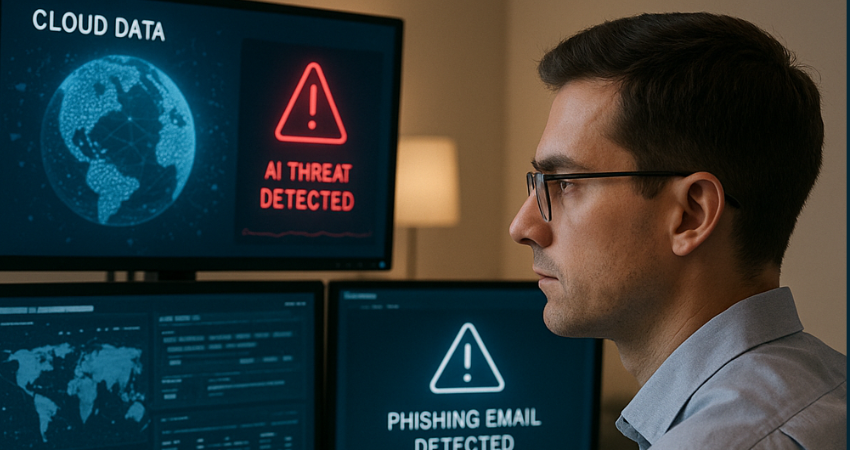
As most of us are aware, cyber-attacks do not remain the same. With the passage of time, they become more advanced and sophisticated. In 2025, cybercrime is more than a risk, it’s a global crisis. Annual damages are projected to hit $10.5 trillion, up from $3 trillion in 2015 (Cybersecurity Ventures). The average cost of a breach rose to $4.88 million in 2024, and in the U.S., it has climbed to $10.22 million this year (IBM Security). Credential theft is on the rise, with a 42% year-over-year increase in stolen log-ins, while global systems recorded over 97 billion exploitation attempts in the past year (Fortinet Threat Landscape Report). These numbers highlight one truth, cyber threats are evolving faster than ever, and defenses must advance just as quickly. We look at how cybersecurity evolves to effectively and efficiently combat the emerging cyberthreats.
Key Takeaways
Remote access demands stronger safeguards. With remote work continuing, organizations should enforce encryption, multi-factor authentication, and phishing awareness to protect distributed devices and connections.
AI is both tool and target. Cybercriminals are deploying AI for phishing, malware, and deepfakes, making it critical for defenders to invest in AI-powered detection and governance.
Hybrid cloud and zero trust reduce impact. As cloud adoption grows, hybrid cloud setups, immutable backups, real-time monitoring, and zero trust frameworks can contain threats and speed recovery.
Prediction 1: Remote Work Will be Made More Secure
Remote work will be an important part of the workforce in this year too. Remote workers will access company networks from different devices as well as geographical locations. Vulnerabilities include unsecured connections as well as insufficient security of devices utilized by remote workers. Encryption will make sure that data dispatched between remote employees and enterprise systems is secure. Multi-factor authentication delivers extra security by demanding multiple verification. Remote employees will be trained to spot and evade phishing attacks.
Prediction 2: Increasing Leveraging of AI (Artificial Intelligence) technology to combat AI- powered cyberattacks
Cyber criminals are increasingly leveraging AI to make their attacks more potent as well as destructive. Hence cyber defense should also use AI to counter AI powered cyberattacks. A classic example are phishing emails leveraging AI. Investments must be made in AI technology to make systems have the capability to fend off AI-powered cyberattacks. This year will see increasing usage of AI in both cyberattacks and counter measures mounted by governments, businesses, and other kinds of institutions. AI is here to stay and this is being realized by most entities.
Prediction 3: More Investment in Cloud Protection
Companies will increasingly leverage the cloud in 2025. Clouds are vulnerable to unauthorized data access as well as corruption or stealing of important and confidential data. In the case of public cloud there are many users which make the task of protecting the cloud from cyberattacks more challenging. To ensure security entities should spread their operations across different cloud providers. There should be ironclad encryption for organization data both in transit and at rest. Other vital measures include complying with existing industry regulations as well as periodic security audits.
Prediction 4: Increased Focus in Combating Cyberattacks from Nation-states
Nations have far more resources than companies. Goals include bringing important infrastructure to a halt, espionage, and financial loss. Counter measures include training staff in identifying and evading state-sponsored cyberattacks. A consolidated approach including the government and other organizations will be needed to meet this massive and continuously evolving threat from external entities. Thus, confidential data will remain confidential, and operations will not be disrupted.
Prediction 5: Combating the Scourge of Deepfakes
With progress in AI, Deepfakes are more challenging to identify and appear much more realistic. The former come in the form of pictures, audios, and videos. Deepfakes are employed for spreading false information, damaging reputation as well as defrauding attempts. There exist deepfake identification tools utilizing AI. This year will see more investment in technologies able to detect deepfakes. Human personnel play an important role as they have attributes missing in machines. The former need to be trained on the latest technologies to identify deepfakes. A proactive approach is required by entities to spot deepfakes early and secure their digital resources as well as online reputation.
To Sum Up
With most organizations having a substantial presence on the Internet in 2025, they should invest in continuously monitoring for existing as well as emerging cyberthreats. Both machines and humans should operate in tandem to keep cyber threats at bay. Partnering with likeminded organizations and periodic awareness campaigns will surely help meet the challenges faced by all.