
Aluminum Foil for Wireless Theft Protection

Share
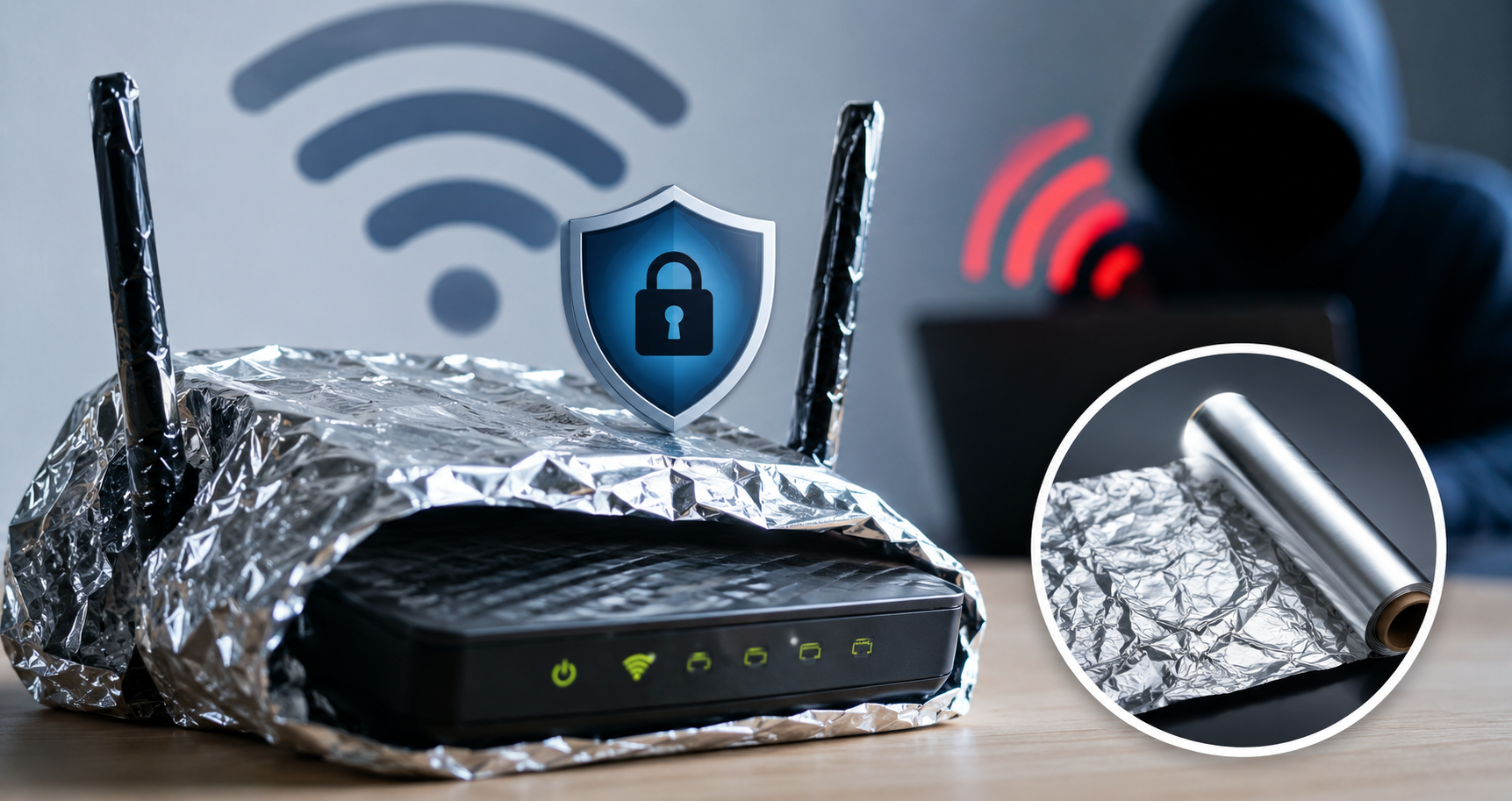
You may have seen people wrapping their wallets with Aluminum foil on social media. This is to block radio waves emanating from contactless cards kept in the wallet. However, this technique has drawbacks. Aluminum foil has the ability to reflect as well as absorb electromagnetic waves. For your information, radio waves are utilized for communication between a RFID (Radio-Frequency Identification) reader and a chip embedded inside a particular card. The signals go through materials including leather, fabric and plastic. However, when the signals impact a metal surface such as aluminum foil most of the signal bounces back while the rest is absorbed or weakened.
The Theoretical Albeit Rare Threat
Contemporary contactless cards utilize RFID (Radio-Frequency Identification) or NFC (Near-Field Communication) technology. These systems enable a card reader to wirelessly retrieve the card’s number and expiration date from a small embedded chip when brought within a few centimeters. This makes possible quick “tap-to-pay” transactions. A significant security concern is “skimming” or “eavesdropping,” where a malicious entity with a concealed reader attempts to capture card data without the owner’s knowledge. While modern cards have encryption and other safeguards that make stealing usable data difficult, the theoretical risk leads to the high demand of physical signal blocking.
Is Aluminum Foil the Best Way to Prevent Wireless Theft
Why Not to Rely on Aluminum Foil
We look at the cons of using Aluminum foil to block radio signals. Note that even a very small gap is enough for signals to pass through. The foil is not always wrapped tightly and evenly. Sometimes it can be folded or have tiny tears. Another aspect is physical movement. When kept in a pocket or wallet the foil can change position or loosen. Hence Aluminum foil is not a perfect solution to block radio waves.
Superior Alternatives Designed for Long Term Use
RFID blocking cards as well as wallets are a better alternative. They don’t need to maintain them. Another option is RFID sleeves. The advantages are they are easy to carry as well are lightweight. RFID wallets as well as sleeves are superior to aluminum foil particularly in conditions where factors such as movement and pressure can adversely affect blocking performance.
FAQs
- Is aluminum foil really the best way to prevent wireless theft?
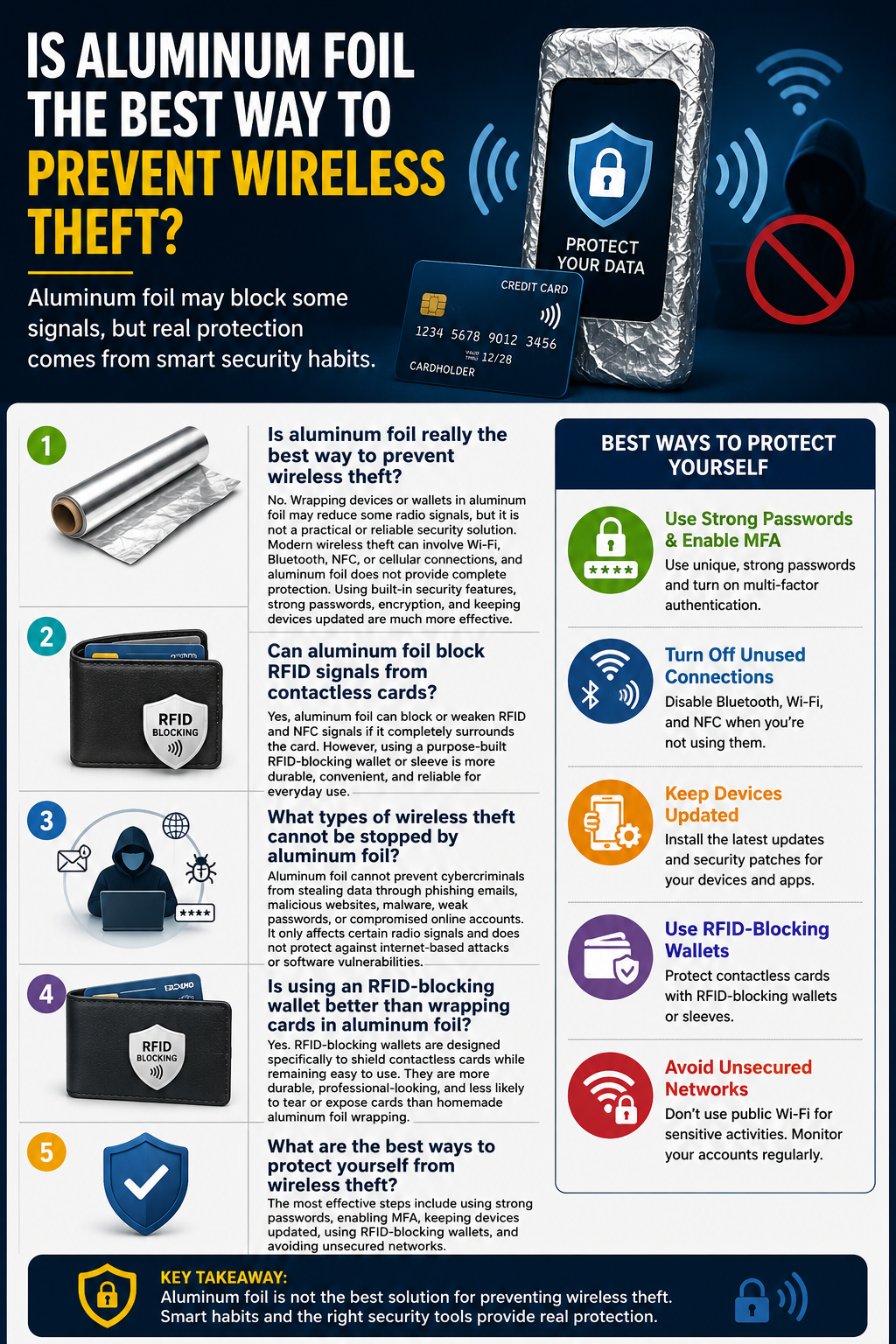
No. Wrapping devices or wallets in aluminum foil may reduce some radio signals, but it is not a practical or reliable security solution. Modern wireless theft can involve Wi-Fi, Bluetooth, NFC, or cellular connections, and aluminum foil does not provide complete protection. Using built-in security features, strong passwords, encryption, and keeping devices updated are much more effective.
- Can aluminum foil block RFID signals from contactless cards?
Yes, aluminum foil can block or weaken RFID and NFC signals if it completely surrounds the card, acting like a simple Faraday shield. However, using a purpose-built RFID-blocking wallet or sleeve is more durable, convenient, and reliable for everyday use.
- What types of wireless theft cannot be stopped by aluminum foil?
Aluminum foil cannot prevent cybercriminals from stealing data through phishing emails, malicious websites, malware, weak passwords, or compromised online accounts. It only affects certain radio signals and does not protect against internet-based attacks or software vulnerabilities.
- Is using an RFID-blocking wallet better than wrapping cards in aluminum foil?
Yes. RFID-blocking wallets are designed specifically to shield contactless cards while remaining easy to use. They are more durable, professional-looking, and less likely to tear or expose cards than homemade aluminum foil wrapping.
- What are the best ways to protect yourself from wireless theft?
The most effective steps include:
- Use strong, unique passwords and enable multi-factor authentication (MFA).
- Turn off Bluetooth, Wi-Fi, or NFC when not in use.
- Keep your devices and apps updated with the latest security patches.
- Use RFID-blocking wallets if you carry contactless payment cards.
- Avoid connecting to unsecured public Wi-Fi networks and monitor your financial accounts regularly for suspicious activity.
SOURCES:-
https://economictimes.indiatimes.com/us/news/why-are-more-people-wrapping-their-wallets-in-aluminum-foil-to-help-block-wireless-theft/articleshow/132475503.cms?from=mdr
https://www.cronista.com/en/today/wrap-the-wallet-and-keys-in-aluminum-foil-what-it-is-for-and-why-it-is-recommended/
https://www.businesstoday.in/latest/trends/story/viral-wallet-hack-decoded-can-aluminum-foil-help-block-wireless-card-theft-heres-the-fact-543809-2026-07-19
https://rfidcloaked.com/aluminium-foil/
https://www.rfidcard.com/does-aluminum-foil-really-block-rfid/?srsltid=AfmBOopNpJg_ubry4qqh4LHTcBRXBEGz72SIJ1Zxbu_yqZqpyIVqFhR1
https://economictimes.indiatimes.com/news/new-updates/does-wrapping-your-phone-in-aluminum-foil-block-tracking-the-truth-behind-this-viral-privacy-hack/articleshow/132511292.cms?from=mdr
https://us.ok.com/ask/why-do-people-wrap-credit-cards-in-foil/