Gas Bill Scam: Elderly Man Loses ₹15.25 Lakh

Share
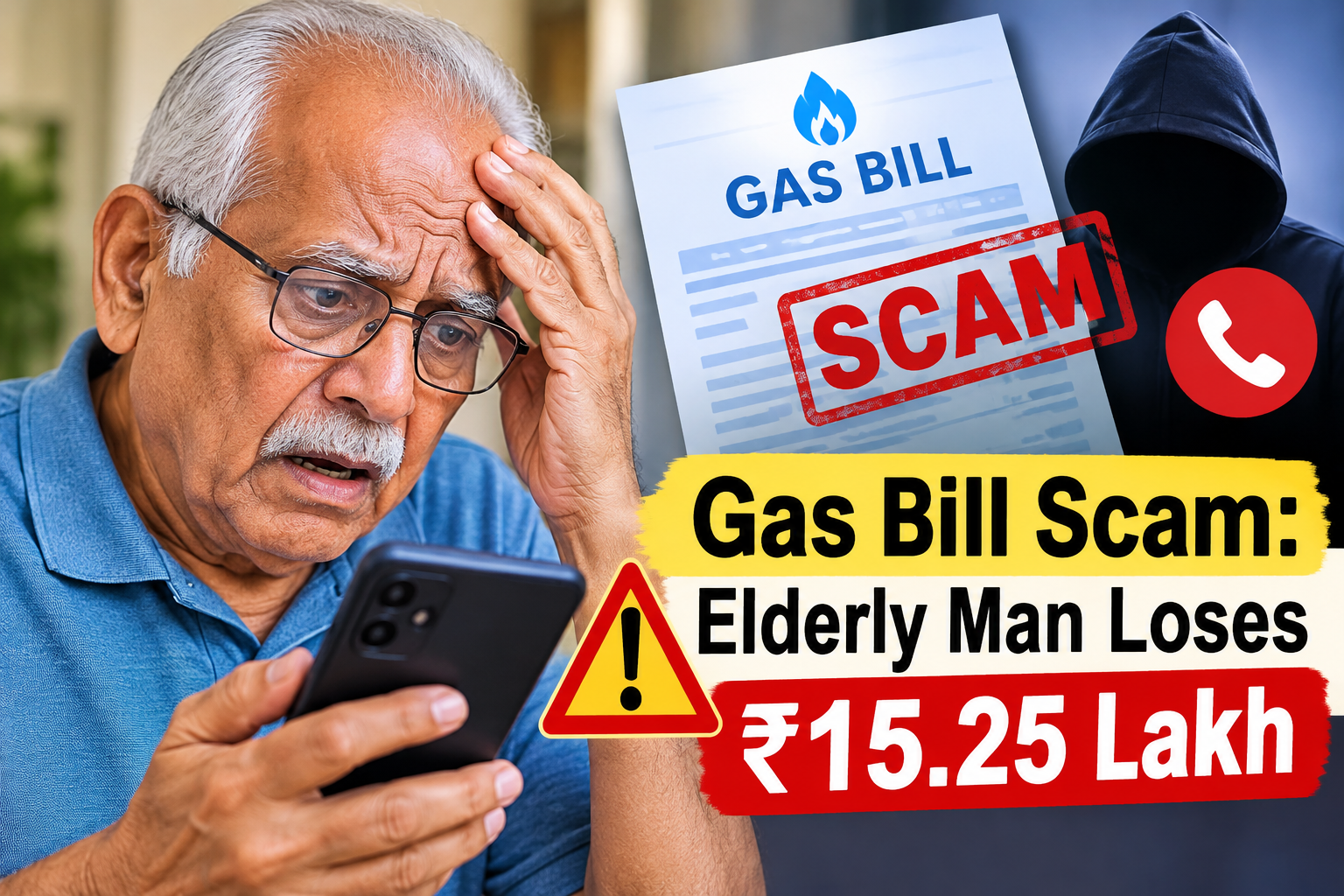
A routine gas bill update has turned into a costly financial nightmare for a 76-year-old retired officer in Belagavi, Karnataka. The elderly man reportedly lost more than ₹15.25 lakh after falling victim to a cyber fraud in which criminals impersonated representatives of a gas company and tricked him into clicking a malicious link.
The incident highlights how cybercriminals are increasingly exploiting everyday services, including gas and electricity bill payments, to target unsuspecting individuals. It also serves as a warning that even a seemingly harmless message about an overdue bill can expose people to serious financial risks.
According to a report by The420.in, the victim lost ₹15,25,333.90 through 61 unauthorised bank transactions carried out over five days.
How the Gas Bill Scam Started
The victim, identified as Rayappa, lives in Ramteerth Nagar in Belagavi. The incident reportedly began on November 7, 2026, when he received a phone call from an unidentified person claiming to represent Megha Gas Company.
The caller informed him that his gas bill was overdue and needed to be updated immediately. When Rayappa asked for further details, the caller sent him a link through his mobile phone with the title ‘GASS.BILL UPDATE’.
Believing that the link was related to a genuine gas billing service, the elderly man clicked on it. However, the link reportedly installed an unauthorised application on his mobile phone.
Unknowingly, Rayappa had allowed a malicious application to enter his device, potentially exposing sensitive information, including banking details and other confidential data.
Cybercriminals Steal More Than ₹15 Lakh Through 61 Transactions
Following the installation of the suspicious application, cybercriminals allegedly gained access to the victim’s banking credentials and one-time passwords (OTPs).
Using the compromised information, the fraudsters began transferring money from his Canara Bank account without his knowledge.
According to the police complaint, the unauthorised transactions took place between November 13 and November 18. During this five-day period, the criminals carried out 61 separate transactions and withdrew a total of ₹15,25,333.90.
Interestingly, the victim did not immediately realise that money was being stolen from his account.
His suspicions arose only when the caller contacted him again and demanded his internet banking password. When Rayappa questioned the caller about this unusual request, the person abruptly disconnected the call.
This made him realise that something was wrong, prompting him to investigate his bank account.
How the Victim Discovered the Fraud
On November 19, Rayappa visited his bank branch and checked his account statement. He was shocked to discover that more than ₹15 lakh had disappeared through multiple unauthorised transactions.
He immediately informed bank officials and requested that his account be frozen to prevent further financial losses.
The victim subsequently reported the incident through India’s national cybercrime helpline, 1930, and approached the local police.
The Belagavi City Cyber Crime Police have registered a case and launched an investigation. Authorities are attempting to identify the person behind the fraudulent phone call, trace the malicious link and application, and investigate the bank accounts that received the stolen money.
How Fake Gas Bill Links Can Put Your Money at Risk
This incident demonstrates how cybercriminals use social engineering to manipulate people into compromising their own digital security.
Social engineering refers to the tactics criminals use to trick individuals into revealing confidential information or performing actions that benefit the attackers.
In this case, the fraudsters used a familiar service – gas bill payment – to gain the victim’s trust.
Such scams generally follow a pattern:
- Impersonating a service provider: Fraudsters contact victims pretending to represent gas, electricity, water or other utility companies.
- Creating a sense of urgency: They claim that a bill is overdue or that an account needs immediate attention.
- Sending fraudulent links: Victims receive links that appear to be related to legitimate billing services.
- Installing malicious applications: Clicking the link may lead to the installation of an unauthorised application containing malware.
- Stealing confidential information: The malicious application may help criminals obtain sensitive information, including banking credentials and OTPs.
- Making unauthorised transactions: Criminals use the stolen information to access financial accounts and transfer money.
The danger is that these messages and calls often appear genuine, making it difficult for ordinary users to recognise the fraud.
How to Protect Yourself From Fake Gas Bill Scams
With cybercriminals increasingly targeting everyday digital activities, people must remain cautious when handling payment-related messages and phone calls.
Here are some practical steps that can help prevent such fraud:
- Never Click on Unverified Links
Avoid clicking on links received through unknown phone numbers, SMS messages or messaging applications. Even if a message appears to come from a familiar service provider, verify its authenticity before taking action.
- Use Official Websites and Applications
Always check gas bills, electricity bills and payment details through the official website or mobile application of the service provider. Avoid downloading applications through links shared by unknown callers.
- Never Share OTPs or Banking Passwords
Banks and legitimate service providers do not require customers to disclose their OTPs, ATM PINs or internet banking passwords over the phone. Never share these details with anyone.
- Be Careful About Unsolicited Phone Calls
Treat unexpected calls claiming that your utility bill needs immediate payment or updating with suspicion. Disconnect the call and contact the company using its officially published customer support number.
- Monitor Your Bank Transactions Regularly
Check your bank statements and transaction alerts frequently. Reporting suspicious transactions immediately can help banks take action before additional money is lost.
- Report Cyber Fraud Immediately
If you notice an unauthorised transaction, contact your bank immediately, request that the affected account or payment channel be secured, and report the incident by calling India’s cybercrime helpline at 1930. You can also register a complaint through the official National Cyber Crime Reporting Portal at https://cybercrime.gov.in/.
A Warning for Elderly People and Their Families
Elderly individuals are particularly vulnerable to scams involving fake customer support calls, utility bill updates and fraudulent payment links. Many are less familiar with evolving digital fraud techniques and may trust callers who claim to represent established service providers.
Family members should regularly educate older relatives about common online scams and encourage them to verify unexpected payment requests before clicking links or downloading applications.
It is equally important to help elderly individuals understand that genuine companies will not threaten immediate service disconnection or demand confidential banking information through unsolicited phone calls.
Conclusion
The loss of more than ₹15.25 lakh in this gas bill scam is a reminder of how quickly an ordinary interaction can turn into a serious financial disaster. A single click on a fraudulent link reportedly exposed the victim to a series of unauthorised transactions, resulting in substantial financial losses.
As digital payment services become increasingly common, cybercriminals continue to develop new ways to exploit people’s trust and lack of awareness. Staying alert, avoiding suspicious links and protecting confidential banking information are essential steps in preventing such incidents.
SOURCE:- https://the420.in/elderly-man-loses-over-rs-15-25-lakh-in-61-transactions-after-clicking-fake-gas-bill-link/