
Delhi Police Bust Pan-India Network Supplying Bank Accounts for Cyber Fraud, Arrest One

Share
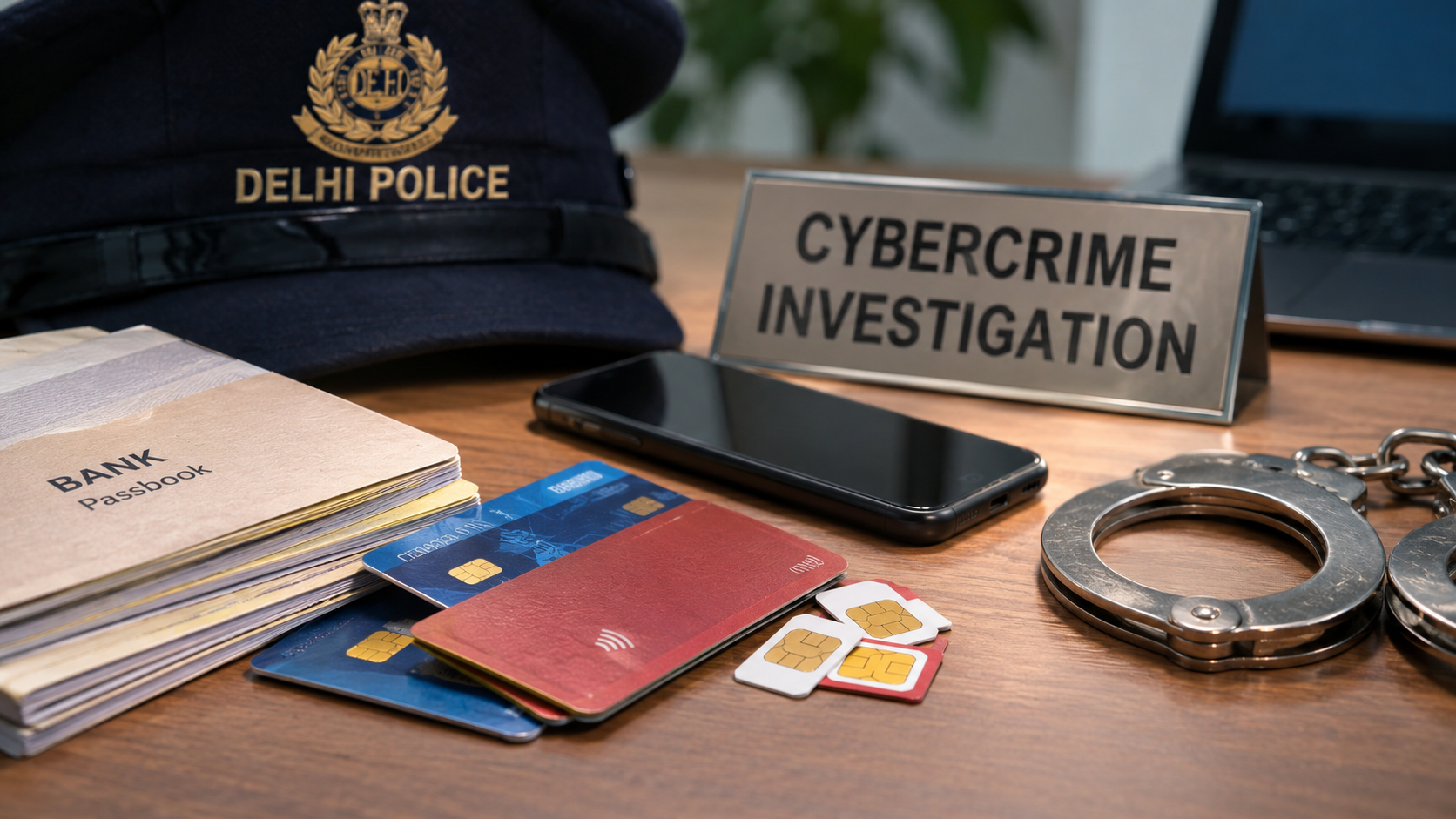
Delhi Police have arrested a 24-year-old man suspected of supplying bank accounts to cybercriminals across India. The investigation has exposed a network that allegedly used mule accounts to collect and transfer money obtained through online investment scams and other illegal activities.
The arrest highlights a growing concern in India’s cybersecurity landscape: cybercriminals are increasingly relying on networks of bank account suppliers to move stolen money and make financial investigations more difficult.
How the Bank Account Network Operated
The accused, identified as Bhagh Singh, was arrested by the Cyber Police Station in Shahdara, Delhi, on November 18, 2026. He is a native of Uttarakhand’s Udham Singh Nagar district and was living in the Jai Vihar area of Baprola, Delhi.
According to the police, Singh allegedly arranged bank accounts, collected the associated banking kits, and supplied them to other members of the network in exchange for commissions.
These accounts, commonly known as mule accounts, were allegedly used to receive money from cyber fraud victims and transfer the proceeds through different financial channels. Investigators suspect that the network also supported illegal online gaming and other unlawful financial activities.
Investigation Began With an Online Investment Scam
The investigation started after a Shahdara resident reported losing approximately ₹2.22 lakh in an online investment fraud.
The victim reportedly received an Instagram message promising attractive investment returns. The fraudsters later added the individual to an online investment group, where they persuaded the victim to make multiple transactions.
However, the promised returns never arrived, and the victim couldn’t recover the invested money.
After registering a case on July 5, police began tracing the financial transactions. Investigators discovered that approximately ₹80,000 of the cheated amount had reached a bank account registered under the name Ankita Enterprises.
Police examined banking transactions, digital footprints, IP logs, telecom records, and location-based intelligence to identify individuals connected to the beneficiary accounts. Their investigation eventually led them to Singh and his alleged role in supplying bank accounts to the network.
Police Recover Banking Documents and Digital Devices
During the arrest, police recovered several items suspected to be connected to the operation.
|
Items recovered |
Quantity |
|
Mobile phones |
6 |
|
Debit cards |
15 |
|
Cheque books |
9 |
|
Passbooks |
4 |
|
SIM cards |
9 |
Preliminary verification also revealed that two bank accounts allegedly connected to the network had appeared in multiple cybercrime complaints registered in different parts of the country.
Police are examining the seized mobile phones, banking documents, and other evidence to establish the full extent of the operation. Investigators are also working to identify other members of the network and trace the ultimate beneficiaries of the transactions.
Why Mule Accounts Are a Serious Cybersecurity Concern
Mule accounts play an important role in many financial cybercrime operations. Fraudsters rarely use their own bank accounts to receive stolen money. Instead, they rely on accounts belonging to other individuals or businesses.
These accounts may be obtained through different methods, including:
- Commission-based recruitment: Individuals receive money for opening bank accounts and handing over their banking credentials or banking kits.
- Misuse of identity documents: Criminal networks may use manipulated KYC documents to establish accounts under false identities.
- Bogus business accounts: Fraudsters create or use shell businesses to open accounts and receive illegal funds.
- Layered transactions: Stolen money moves through several accounts before criminals withdraw it or convert it into cryptocurrency.
This arrangement creates additional hurdles for investigators because the first account receiving the stolen money may not belong to the people who planned or carried out the fraud.
The Delhi Police investigation demonstrates how account suppliers can become an important part of organised cybercrime networks.
What Bank Customers Should Watch Out For
People should be cautious about anyone offering commissions for opening bank accounts or handing over debit cards, cheque books, SIM cards, or banking credentials.
A bank account is registered in the account holder’s name. Allowing someone else to operate it can expose the account holder to serious legal and financial consequences if criminals use it for fraudulent transactions.
Customers should follow these precautions:
- Never share banking credentials, OTPs, debit cards, or PINs with another person.
- Don’t allow strangers or acquaintances to use your bank account to receive or transfer money.
- Avoid offers that promise easy commissions for providing bank accounts.
- Report suspicious banking transactions to your bank immediately.
- Report financial cyber fraud through India’s official cybercrime helpline, 1930, or the National Cyber Crime Reporting Portal.
To Sum Up
The Delhi Police investigation highlights an often-overlooked part of organised cybercrime: the people and networks that provide bank accounts to fraudsters. While online investment scams attract victims with promises of quick profits, mule accounts help criminals move the stolen money. Disrupting these account supply networks is an important step in tackling financial cybercrime. The investigation is ongoing, and police are working to identify other individuals involved in the alleged operation.