The Shift from Phishing Tactics to Use of Malware by Cyber Fraudsters

Share
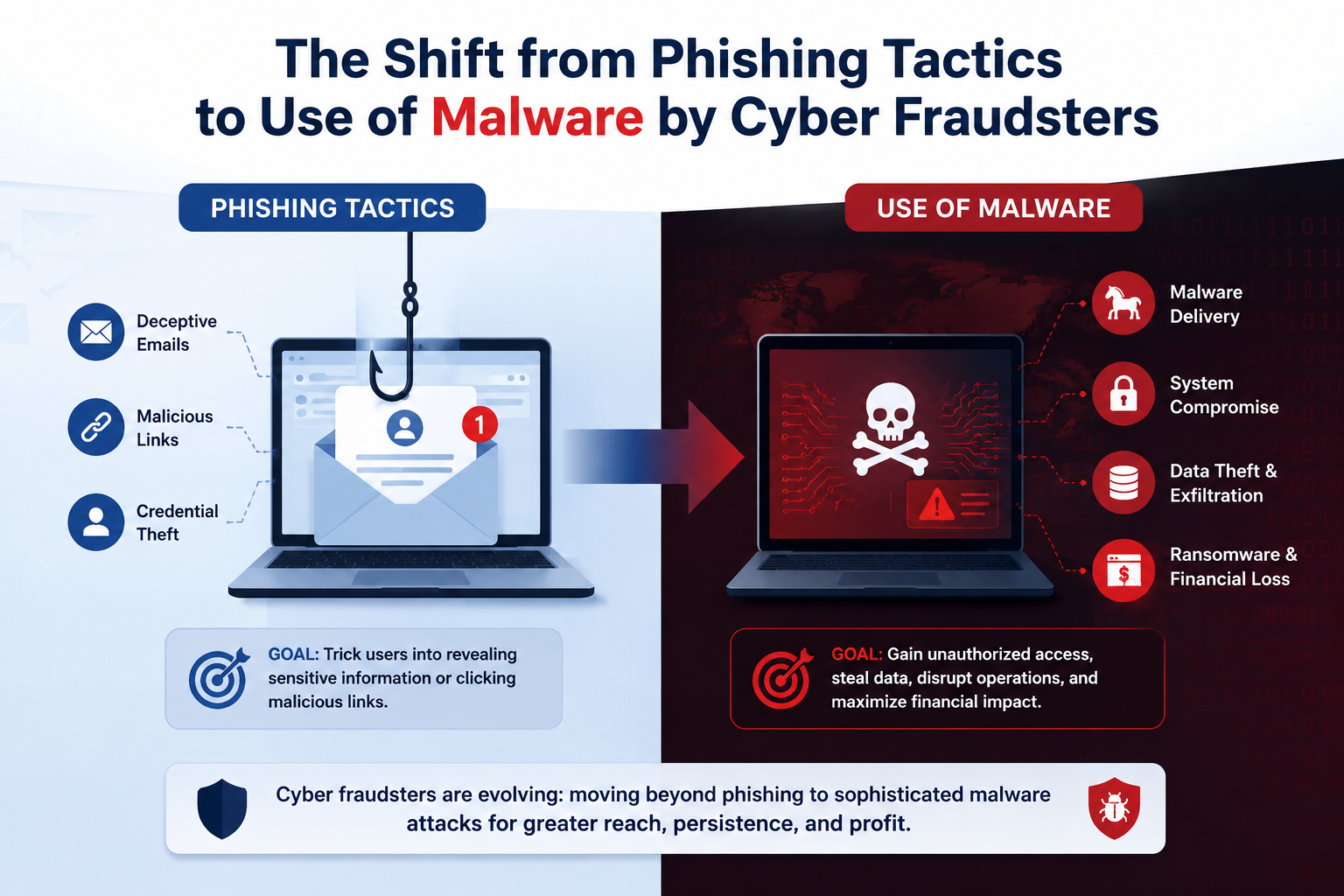
Conventional Phishing attacks involved tricking potential victims to enter their respective usernames and passwords on fake websites which resembled the genuine websites. Once the login credentials were captured, they were used to steal business as well as personal data. A new trend that has emerged is to trick users into downloading malware that once downloaded steals information stealthily. This tactic is much more effective and dangerous than the older Phishing technique. Increasingly cyber attackers are leveraging infostealers a class of malware engineered to stealthily gather passwords, web browser cookies, tokens of sessions, saved autofill credentials, cryptocurrency wallet info as well as confidential files present on the system.
Fraudsters obtain connectivity to previously authenticated sessions as well as saved info which boost the chances of success on a significant level. Since the attack takes place silently the victims are not alerted. Harmful downloads are deployed through different channels such as malvertising, malicious software downloads, cracked applications, game cheats as well as malicious browser updates. Once downloaded the malware starts to transfer data to the cyber criminal’s systems.
For your information nowadays Malware-as-a-service is now readily available. It is relatively inexpensive and delivers ready-made stealer kits and other malicious applications. So even actors with relatively scarce capabilities can execute major credential theft attacks. The exfiltrated data is sold to various entities for objectives ranging from ransomware attacks, compromise of business emails, monetary frauds as well as hostile account takeover.
Steps to stop this kind of attack is to be cautious while browsing and/or downloading. Software applications should strictly be sourced from official websites or reputed app stores. Don’t download from sponsored advertisements or third-party download websites. Prior to downloading extensions or software modules it is recommended to vet the credentials of the source and whether it is really required by you. Lastly running commands from unvetted sources should not be done without completely comprehending what the command is for and vetting the command(s).
SOURCES:-
https://cybersecuritynews.com/cybercriminals-shift-from-fake-login-pages/
https://www.malwarebytes.com/blog/threat-intel/2026/06/infostealers-are-becoming-the-go-to-phishing-payload
https://cypro.co.uk/insights/cyber-bulletins/infostealers-the-go-to-phishing-payload-in-cyber-threats/
https://gbhackers.com/phishing-attacks-pivot-to-infostealer-malware/