How to Choose a Cybersecurity Service Provider for Small Business

Share
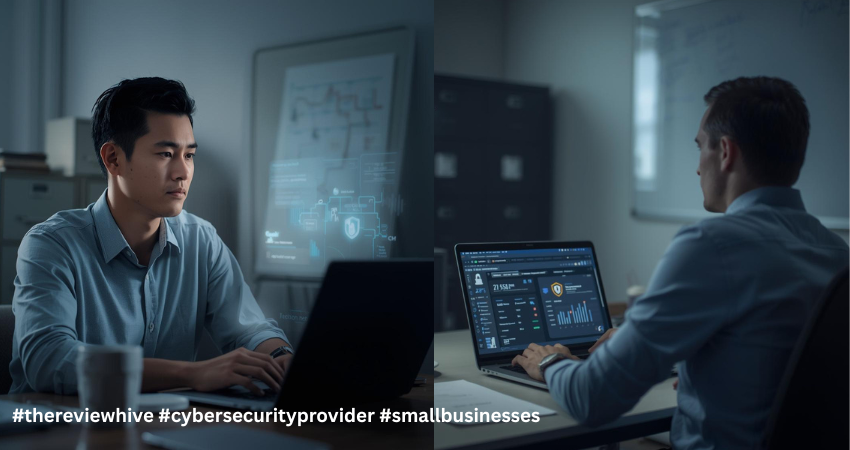
Many small business owners believe cybercriminals focus mainly on large corporations. That assumption often leads to dangerous gaps in security planning. In reality, small businesses are among the most frequent targets for cyberattacks. Smaller organizations usually have limited security infrastructure, fewer IT staff, and less visibility into suspicious activity across their networks. Attackers know this and often see small businesses as easier entry points. According to the Verizon Data Breach Investigations Report (DBIR), 43% of cyberattacks target small businesses. The report notes that attackers actively scan for organizations with weaker defenses, outdated systems, or employees who may not have received proper cybersecurity training.
Despite these risks, many businesses still feel unprepared. A U.S. Chamber of Commerce cybersecurity survey found that 60% of small business owners are concerned about cybersecurity threats, yet fewer than 25% feel confident in their ability to defend their systems. This gap between awareness and preparedness is exactly why choosing the right cybersecurity service provider for small business has become essential.
TL;DR
- 43% of cyberattacks target small businesses according to Verizon DBIR.
- Cybercrime damages could reach $10.5 trillion annually according to Cybersecurity Ventures.
- Small businesses often lack internal security teams.
- A cybersecurity service provider offers monitoring, threat detection, and incident response.
- Choosing the right provider improves long-term business resilience.
A capable cybersecurity partner does more than install security tools. They continuously monitor systems, detect suspicious activity early, guide businesses through security decisions, and respond quickly when incidents occur. For many small organizations, working with a cybersecurity provider becomes the most practical way to build strong defenses without maintaining a large in-house security team.
Why Small Businesses Need a Cybersecurity Service Provider
Cybercrime has grown into one of the largest economic threats facing businesses today. According to Cybersecurity Ventures, global cybercrime damages are expected to reach $10.5 trillion annually by 2025. This includes direct financial losses, business disruption, reputational damage, regulatory penalties, and recovery costs. For small businesses, even a single cyber incident can cause long-term consequences. A ransomware attack may lock employees out of systems for days. Customer data may become exposed. Operations may slow down or stop entirely while systems are restored.
The IBM Cost of a Data Breach Report 2023 found that the average global cost of a data breach reached $4.45 million, the highest recorded so far. While smaller businesses may face lower direct losses, the financial strain from downtime, recovery costs, and lost customer trust can still be severe. Perhaps the most concerning statistic comes from the U.S. National Cyber Security Alliance, which reports that 60% of small businesses close within six months of a major cyberattack.
Building a dedicated cybersecurity team capable of monitoring threats, analyzing vulnerabilities, and responding to incidents requires significant investment. Many small organizations simply do not have the resources to maintain such teams internally. That is where managed security services providers (MSSPs) become valuable. These providers deliver continuous monitoring, threat detection, and incident response services, allowing businesses to access cybersecurity expertise without hiring a full internal team.
What a Cybersecurity Service Provider Actually Does
A cybersecurity service provider protects business infrastructure through a combination of technology, monitoring, and expertise. Instead of relying on a single security tool, providers implement multiple layers of protection across networks, endpoints, and cloud environments. This layered approach improves the chances of detecting threats early and preventing attackers from moving deeper into company systems. Several core services form the foundation of modern cybersecurity protection.
- Threat Monitoring and Detection
Continuous monitoring is one of the most important services a cybersecurity provider offers. Security teams analyze system activity in real time to detect anomalies such as unusual login attempts, suspicious data transfers, or malware behavior.
According to IBM Security research, organizations that detect breaches quickly significantly reduce the financial impact compared to companies that discover incidents months later.
Early detection helps contain threats before attackers gain full access to business systems.
Endpoints such as laptops, mobile devices, and servers often become entry points for cyberattacks. Malware infections and phishing attacks frequently begin on individual devices before spreading across networks. Strong endpoint protection helps detect malicious activity and isolate compromised systems quickly. The Sophos State of Ransomware Report 2023 found that 66% of organizations experienced ransomware attacks, with compromised endpoints often serving as the initial attack vector.
- Vulnerability Assessments
Cybersecurity providers regularly scan networks and applications to identify weaknesses that attackers could exploit. These assessments help businesses discover outdated software, misconfigured systems, or exposed credentials. Fixing vulnerabilities early significantly reduces the chances of successful cyberattacks.
- Incident Response and Recovery
Even well-protected organizations can experience security incidents. When attacks occur, cybersecurity providers guide businesses through containment, investigation, and recovery. This process includes isolating compromised systems, identifying how attackers gained access, and restoring affected services.
- Compliance and Regulatory Support
Many industries operate under strict data protection regulations. Healthcare providers must comply with HIPAA, financial businesses often follow PCI DSS, and companies handling European data must meet GDPR requirements. Cybersecurity providers help businesses implement these frameworks and prepare for security audits.
Key Factors When Choosing a Cybersecurity Service Provider
Choosing a cybersecurity partner should be treated as a strategic decision rather than simply purchasing software. Security providers become responsible for protecting business systems, customer information, and operational continuity. Evaluating their capabilities carefully helps ensure the partnership supports long-term resilience.
- Experience with Small Businesses
Cybersecurity requirements vary widely depending on company size and industry. Large enterprises often have internal security teams and complex infrastructure. Small businesses typically operate with fewer IT resources and simpler environments. Providers experienced in cybersecurity solutions for small businesses understand these constraints. They design security programs that balance effective protection with manageable costs.
- Range of Security Services
Cyber threats rarely rely on a single technique. Attackers often combine phishing emails, credential theft, malware infections, and network vulnerabilities. A strong managed security services provider should offer layered protection that includes network monitoring, endpoint security, email protection, vulnerability management, and cloud security. Research from Gartner shows that layered security defenses significantly reduce the success rate of cyberattacks.
- 24/7 Threat Monitoring
Cyberattacks rarely occur during normal business hours. That is why many cybersecurity providers operate Security Operations Centers (SOC) that monitor systems continuously. Security analysts investigate alerts and respond to suspicious activity immediately, reducing the time attackers can remain undetected.
- Transparency and Security Reporting
Cybersecurity should never feel like a black box. Reliable providers offer regular security reports that explain vulnerabilities, threat activity, and recommended improvements. These reports help business owners understand how their security posture evolves over time.
- Compliance and Regulatory Expertise
Businesses operating in regulated industries must demonstrate strong data protection practices. A knowledgeable cybersecurity provider helps organizations align with frameworks such as ISO 27001, SOC 2, GDPR, and PCI DSS. Compliance not only reduces legal risk but also strengthens customer trust.
- Long-Term Security Strategy
Cybersecurity is an ongoing process rather than a one-time project. Many providers offer virtual Chief Information Security Officer (vCISO) services that help businesses develop long-term security strategies and policies.This guidance helps organizations adapt their defenses as technology and threats evolve.
Cybersecurity Provider Comparison Checklist
When evaluating cybersecurity providers, using a structured comparison framework helps businesses make objective decisions.
| Evaluation Factor | What to Look For | Why It Matters |
| SMB Experience | Proven experience with small businesses | Ensures solutions match smaller IT environments |
| 24/7 Monitoring | Security Operations Center monitoring systems continuously | Reduces time attackers remain undetected |
| Incident Response | Clear breach response process | Faster containment reduces damage |
| Range of Services | Endpoint, network, email, and cloud security | Layered protection improves defense |
| Compliance Expertise | Knowledge of industry regulations | Prevents regulatory penalties |
| Reporting | Regular security and risk reports | Improves visibility into threats |
| Scalability | Services that grow with the business | Prevents future security gaps |
Cybersecurity Provider Evaluation Checklist
Before selecting a cybersecurity provider, small business owners should review the following questions.
- Security Capabilities
✔ Do they provide 24/7 threat monitoring?
✔ Do they operate a Security Operations Center (SOC)?
✔ Do they offer endpoint, network, and cloud protection?
- Incident Response
✔ Do they have a documented incident response plan?
✔ How quickly can they respond to a breach?
- Risk Assessment
✔ Do they perform regular vulnerability scans?
✔ Do they prioritize security risks and remediation?
- Compliance
✔ Do they support regulatory frameworks such as GDPR or PCI DSS?
- Transparency
✔ Will they provide regular security reports and risk updates?
Cybersecurity Stack Used by Many Security Providers
A modern cybersecurity environment relies on several layers of protection.
| Security Layer | Purpose |
| Endpoint Protection | Detects malware and ransomware |
| Email Security | Blocks phishing attacks |
| Network Security | Prevents unauthorized access |
| Threat Intelligence | Identifies emerging threats |
| Vulnerability Scanning | Detects weaknesses in systems |
| SIEM Monitoring | Collects and analyzes security events |
This layered architecture helps organizations detect and respond to threats across different parts of their infrastructure.
Common Cybersecurity Mistakes Small Businesses Make
Even businesses that invest in security tools sometimes overlook critical areas. One common mistake is relying only on antivirus software. Modern cyberattacks often bypass traditional antivirus tools through phishing, credential theft, or software vulnerabilities. Another frequent issue is poor password management. Weak or reused passwords remain one of the easiest ways attackers gain access to business systems. Lack of employee security awareness is another major risk. According to the Verizon DBIR, phishing remains one of the most common initial attack vectors. Employee training and security awareness programs significantly reduce these risks.
Cost of Cybersecurity Services for Small Businesses
The cost of cybersecurity services varies depending on business size and protection requirements.
Basic security monitoring services may cost $100 to $500 per month for small organizations. More advanced managed security services that include threat detection, vulnerability management, and incident response may cost $1,000 to $5,000 per month, depending on the level of coverage. Although these costs may seem significant, they are often far lower than the cost of recovering from a cyberattack. Investing in preventive security measures is typically more affordable than responding to breaches after they occur.
To Sum Up
Cybersecurity is no longer just a technical concern handled by IT departments. It is a core business risk that affects operations, customer trust, and long-term growth. For small businesses, partnering with the right cybersecurity service provider helps bridge the gap between growing cyber threats and limited internal resources. A reliable security partner provides visibility, guidance, and protection that strengthens resilience in an increasingly digital world.
FAQs
What is a cybersecurity service provider?
A cybersecurity service provider protects businesses from digital threats by offering monitoring, threat detection, vulnerability management, and incident response services.
Why do small businesses need cybersecurity protection?
Small businesses are common targets for cybercriminals because they often lack strong defenses and dedicated security teams.
What is a managed security services provider?
A managed security services provider (MSSP) remotely monitors and manages cybersecurity systems to detect threats and prevent attacks.
How much does cybersecurity cost for small businesses?
Costs vary widely depending on services. Basic monitoring may cost a few hundred dollars monthly, while advanced managed security services may cost several thousand dollars per month.