
RBI Plans ₹25,000 Compensation for Digital Payment Fraud Victims in India

Share
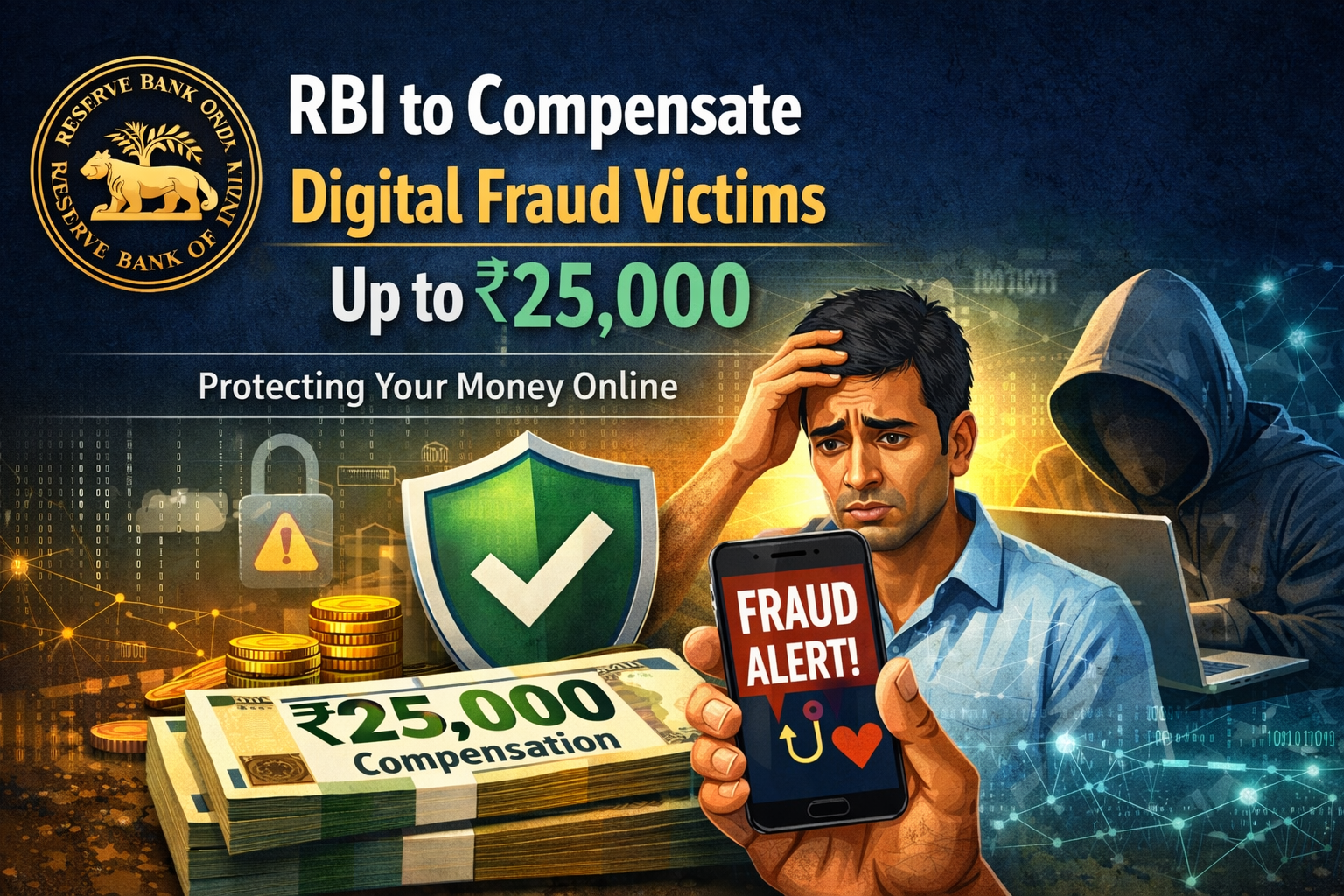
India’s central bank is moving to protect people who lose money in small-value digital payment fraud. The Reserve Bank of India (RBI) has proposed a new framework that could offer compensation of up to ₹25,000 to victims of unauthorized digital transactions. The goal is to give users more confidence in online payments while keeping the system fair and safe.
Digital payments have grown fast in India over the last decade. Millions of people use mobile wallets, UPI apps, online banking, cards, and other digital channels every day. But as usage has risen, fraud and scams have also increased, especially at lower value levels. Small frauds might not involve large sums, but they still hurt users personally and shake trust in digital systems.
The RBI’s new proposal is meant to give users a financial backstop when they lose money in these situations.
What the Proposed Compensation Framework Means
Under this plan:
- Individuals affected by unauthorized digital payment fraud could receive up to ₹25,000 as compensation.
- The compensation would apply only when the loss was not caused by the customer’s own actions and there was clear evidence of fraud.
- RBI has suggested this compensation could be about 85% of the loss or ₹25,000, whichever is lower, but the final wording and conditions will be set when the framework is officially released.
- The plan may be funded through RBI’s existing Depositor Education and Awareness Fund, which already holds surplus money set aside for customer protection and awareness.
RBI Governor Sanjay Malhotra said the idea is to support users and reduce the fear of losing money due to digital fraud. He also made it clear the detailed rules will come after more discussions with banks, payment platforms, and other stakeholders. At the moment, the proposal is still in the drafting phase.
Why RBI Is Taking This Step
Digital transactions have become part of daily life for many Indians. UPI alone processes billions of transactions every month. With this volume, fraudsters have developed new ways to trick users. These include fake calls, phishing links, fake apps, and social engineering tactics that push people into sharing OTPs or sensitive data.
Smaller fraud cases often go unreported or unresolved because banks and payment providers are cautious about taking on liability for every small loss. Users, in turn, feel unprotected.
RBI wants to change that by:
- Giving people a clear, set compensation amount for small losses
- Reducing the friction and confusion around complaints
- Encouraging safer digital payment practices across the ecosystem
- Pushing banks and payment firms to strengthen fraud prevention
This initiative is part of a broader push by RBI to update customer protection norms, including guidelines for banking complaints, refund timelines, authentication safeguards, and dispute resolution mechanisms.
What Could Change for Users
If the framework is approved as proposed:
- Victims of small digital fraud may not have to fight long battles to recover money
- Claims may become standardized, with clear eligibility conditions
- Payment apps, banks, and fintech companies may tighten fraud protection systems
- More awareness campaigns may roll out to educate users about safe digital practices
But it’s important to note that the compensation plan hasn’t been finalized. RBI will publish a detailed draft of the rules soon. That draft will clarify eligibility, documentation needed, timelines, and how disputes will be handled.
What Experts and Users Are Saying
Some industry voices welcome this move, saying it could make digital payments feel safer for millions of Indians. Users who fear losing hard-earned money to scams may view this as a safety net.
Banks and payment platforms have so far been careful in their responses. They want to understand the final eligibility criteria, how liability is shared, and how this will affect fraud detection responsibilities. Many also expect technological upgrades to reduce fraud risks further.
A Step Toward Stronger Digital Trust
RBI’s proposal is not a complete solution to fraud. Scams will still happen. But by setting clear compensation limits and processing guidelines, RBI is signaling a shift toward consumer-first practices in digital finance.
The plan aligns with global trends where regulators increasingly focus on protecting individuals in digital ecosystems, especially as payments become faster and more embedded in everyday life.
For now, users should continue to follow basic safety measures, such as:
- Never sharing OTPs or bank details
- Verifying digital payment links before clicking
- Using official apps from trusted sources
- Reporting fraud early to banks or payment providers
These steps, combined with stronger regulatory support, can make digital payments safer and more reliable for everyone.
FAQs: RBI’s Digital Payment Fraud Compensation Framework
- Who will be eligible for the ₹25,000 compensation?
A. Individuals whose money is lost in unauthorized digital payment fraud may be eligible. Final eligibility rules will be in the official RBI draft. - Does this apply to all digital payment platforms?
A. The proposal is meant to cover losses through banks, UPI apps, credit/debit cards, wallets, and similar platforms. Final scope will be in RBI’s official rules. - Is the ₹25,000 compensation guaranteed?
A. Not yet. The framework is still being finalized. Once RBI releases the draft and final rules, it will specify how compensation is paid. - What counts as “fraud”?
A. Fraud generally means unauthorized transactions caused by a third party without the customer’s consent. RBI will define this more clearly in the final guidelines. - How many times can someone claim compensation?
A. RBI has indicated it may allow compensation only once per person under this scheme, but the final rule will confirm. - Will this cover losses bigger than ₹25,000?
A. No. This framework is aimed at small-value fraud losses. Larger cases may need separate handling by banks or other legal channels. - When will the final rules come out?
A. RBI has said it will release a draft for public consultation first. After that, it will finalize rules based on feedback. - How do I report fraud now?
A. Users should immediately report any unauthorized transaction to their bank or payment service provider. Most have dedicated fraud or dispute resolution teams.